Red-Shouldered Hawk- Photographer Matthew Krawczyk
I’m a new birder from Clayton North Carolina and birding has been the best medicine for my body and mind. I get plenty of exercise hiking around trying to add different bird species to my life list and get to see a lot of new places looking for different habitats.
I think the best part of birding for me is the complete disconnect from my everyday grind. Whether it’s 15 minutes in the backyard watching my feeders or taking a day trip to a new birding hot spot, birding helps me “escape” from my daily work grind. I’ve never been so at peace when I’m learning about bird species, using ebird to find birds I’m looking for, or trying to hone my bird song skills.
Besides using birding as a form of therapy, I really enjoy educating myself about local birds and the conservation of all bird species. I also like to photograph my bird sightings using my Gosky spotting scope with a cell phone adapter and a Samsung Galaxy S9 smartphone. I’m still new to birding, but hopefully I can meet some of my fellow birders out on the trail and share our birding stories.
Check out more of Matthew’s awesome spotting scope photos and his latest adventures birding here in North Carolina at @kingkrawczyk on Instagram.
Just another white breasted Nuthatch defying gravity on his way down a tree trunk on an early sunny morning, lol!
Right after I took this pic, I asked myself “why do nuthatches walk headfirst down the trunks of trees ? So I did a little research and found an interesting answer to that question at https://northernwoodlands.org/outside_story/article/nuthatches-the-upside-down-birds 🌿 Quote below… “There’s no definitive answer to that,” said Cameron Ghalambor, a professor of biology at Colorado State University who has studied red-breasted nuthatches. The theory is the birds benefit from their different viewpoint. “You can imagine a creeper or a woodpecker facing the bark of a tree and looking up in the crevices of the bark for food items,” he said. “But there is this unexploited niche that you could access if you were working your way down the tree.”
🌿 As a working photographer I get this! Working through photographic challenges by employing an alternate perspective has often yielded great rewards. Better still, a complete understanding of the benefits of working within a niche saved my career. Looks like Nuthatches are my spirit animal, lol! Photo by @sally_siko
I just wanted to say welcome to everyone who’s joined me here on Birdwatching N.C. this week. Thanks for being a part of this little (but growing) flock. It’s been really cool to connect with like minded people. By this I mean of course, to meet folks who know what the term “mid to high-canopy dweller” means, lol! I love the fact that there are those out there who can explain the difference between a Cooper’s hawk and a red-shouldered Hawk based on the shape of the spotted feathers on the breast.
Better still, I’ve got a ton of respect those of you who
are brave enough to ask me for help when you’re stumped with an ID and
am thankful to each and every one of my fellow bird-nerds for their
insights when I’ve asked for assistance myself.
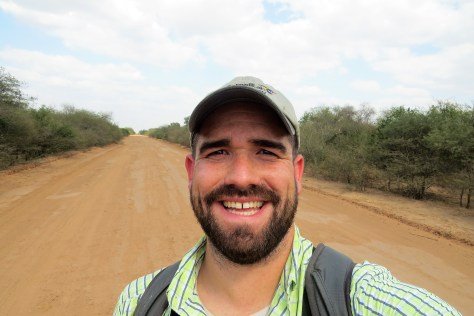
Almost four years later, working for the Atlanta Audubon Society still feels like a dream. Many of my days are comprised of conducting field surveys, banding birds at restoration sites, advocating for bird-friendly communities, and educating nature lovers ranging from four to eighty-four years in age. It really is a dream come true. When I think back on my journey and all the steps that lead me here, my time in North Carolina sticks out as one of the most impactful. While it may have been short in duration (just over two months), it was rich in experiences and connections to a community and an ecosystem.
By the end of my sophomore year at Ohio State University, birds had begun to consume my life. I was splitting time between work at the Columbus Zoo, a course load focusing on zoology, and an internship at the biological diversity museum where I was introduced to the world of avian research. Nights banding Eastern Screech-Owls and days checking Eastern Bluebird boxes with graduate students made me explode with excitement and I could not wait to land a summer job studying birds out in the field. After submitting more than a few applications, I finally struck gold. With my Jeep packed for a summer of excitement and my first real taste of independence, I was off to a place I had just learned about a few weeks earlier – Manteo, North Carolina.
After what seemed like a never-ending drive eastward, I arrived at my home for the next few months. I was brought to North Carolina thanks to a new organization called the Coastal Carolina Purple Martin Society and funding from Defenders of Wildlife and the U.S. Fish and Wildlife Service. For the summer of 2005 I was tasked to study the behavior of both the Purple Martins and the humans who visit the William B. Umstead (or Old Manns Harbor) Bridge. During the summer months, martins will travel up to 100 miles to safely roost on the I-beams under the bridge. As young fledge, the flock grows and grows until it totals over 100,000 birds. It is the greatest avian spectacle I have ever seen in my life. During my time at Manns Harbor, there was no observation dock to view the birds, there were no flashing lights alerting people to the birds, and there was no real education about this site from an avian perspective. Because of this, birds perished due to collisions with cars and motorists were put at risk.
My work schedule had me at the roost at dawn and dusk but most of the rest of my days were free to explore. I became very familiar with Pea Island, Alligator River, and the local bird watching store. Life birds flooded in for this Midwestern boy ranging from Red-cockaded Woodpeckers to Brown-headed Nuthatches and Piping Plovers. A day spent on the ocean with the famous Brian Patteson was a true highlight and I think internally it convinced me that I had reached full bird nerd status. I made great friends with local birders, the family that hosted me, and colleagues that allowed me to spend lazy evenings with them out in Columbia under their martin gourds. I became fully immersed in all things bird. I understood how birds could connect one to the public and give a sense of place. It was an experience of a lifetime.
As the summer came to a close, I was changed forever as was the bridge. A Purple Martin festival had taken place, relationships had been made, programs had been given, and it seemed like the people I interacted with embraced the unique feathered community they had right around the corner. In the years following, flashing lights were installed as was a fishing/observation dock. The boat trips where one could see the roosting birds grew in frequency and attendance. Future years saw a more educated populace and a lower death toll for these amazing long-distance migrants.
The skills and experiences that I obtained during my summer in North Carolina kick started my ornithological career. The following summer I spent in Paraguay conducting research and exploring it’s most remote locales. Over a decade later, Paraguay is once again calling me back down to the southern hemisphere. In addition to my duties at Atlanta Audubon, I am the owner and president of a new bird tour company called Teal Birding Tours. At Teal Birding, we will offer intimate, fun, comfortable, and exciting bird tours. While we will be more than happy to have anyone on our trips, we especially hope to serve those who call the southeast home. With this in mind, I encourage to join me on our upcoming Paraguay trip set for November of 2019.
Paraguay is a place historically overlooked by birders due to its better-known neighbors, Argentina and Brazil. However, Paraguay is a safe and nature rich nation worthy of your attention. Our two week excursion will cover a multitude of habitats ranging from the saline lagoons of the central Chaco to the lush Atlantic rainforest. We expect to easily see 300-325 species with a few top targets including the critically endangered White-winged Nightjar, the jumbo size Jabiru stork, and the national bird of Paraguay, the Bare-throated Bellbird. Great chances for mammals, tastes of some of the local food and drink including Chipa and Tereré, as well as great comradery are sure to make for a wonderful experience.
I am where I am today thanks to my time in North Carolina and I am eternally grateful. I hope a few North Carolinians will once again lend me some support and will consider joining me in Paraguay or on a future trip. If you have any questions, feel free to check out my website (www. tealbirding.com) or send me an email at info@tealbirding.com. You can also find me on Instagram @tealbirding
Good birding and I look forward to seeing you out in the field!
Bird watching tours, trips, adventures and birder news in North Carolina