Interviews and blog posts by expert birders, tour guides and bird centered retailers from throughout North Carolina and the southeastern United States.
While driving through Vass, NC on the way home from a birding trip, I saw some large birds swooping and diving over a distant farm field. As I got closer, I noticed the birds had a white patch showing through on their wings. It dawned on me that they might be common Nighthawks! I’d never had the opportunity to photograph one of these before so I quickly pulled over (read skidded off of the road and ripped my truck into the nearest parking lot haha!) , grabbed my camera and hopped outta the truck to get a better look.
As it turned out, they were indeed Nighthawks and there were a ton of them soaring over the grass hunting for insects. Photographing them was quite difficult as these guys move fast! *Lol, check out the photo below see one flying upside down in a barrel roll! Luckily I managed to grab a few decent shots which isn’t bad for a first attempt.
Nighthawks usually feed at dusk or dawn above open farm fields and in habitats containing open, dry areas of scrub brush. I spotted this flock during the middle of the day which made this encounter kinda surprising. They are voracious consumers of insects like beetles, butterflies, mosquitoes and grasshoppers and are particularly fond of eating termites and winged ant swarms when the opportunity arises. As many as there were out here, I wondered if a large termite swarm had attracted them to this field.
These large members of the nightjar family spend the summer in North Carolina and will stick around until mid September. They are locally common in our coastal regions and may also be seen in the central part of our state in agricultural areas. Aren’t they neat?!
Check out this handsome fellow singing his heart out at Yates Mill Park in Raleigh, NC. It’s an Indigo Bunting! This species is one of the most vibrantly colored birds we’ve got here in North Carolina. They are normally spotted from April to October and can be found in wide open fields which contain a few tall trees with scrub brush mixed into the grass.
Indigo Buntings are named for their deep blue color that makes them look like they’ve been dipped in indigo dye, yet they are actually dressed in black plumage. Though they may look colorful, it’s a trick of the light which gives them this boldly hued appearance. How can this be?
The secret to their incredible colors lies in their unique feather structure which diffracts sunlight to show only a visible blue wave length. And because the blue is a light show rather than true pigmentation, depending on the angle or quality of the sunlight the Buntings can appear to have several shades of the blue color ranging from aqua to cobalt showing in it’s feathers. Pretty neat huh? 🙂
While birding at Harris Lake Park in New Hill North Carolina last weekend, I was surprised by the sight of this female juvenile Bald Eagle flying low over a field near the playground area. Although I often see these impressive birds here, normally they tend to hang out on the western side of the lake where it’s less populated with park visitors.
Bald Eagles are found throughout the Tarheel state from the mountains to the coast and thanks to a ban on DDT & the efforts of conservation programs, their numbers are increasing. Although wintertime brings in migrants down from Canada there are quite a few of them that even call the Triangle region home throughout the entire year. In fact, nearby Jordan Lake hosts over 20+ pairs of breeding Bald Eagles which is pretty awesome!
Look for these large raptors hunting for a meal over large bodies of water such as rivers, lakes and estuaries. They are an especially common sight in the Lake Mattamuskeet and Jordan Lake SRA’s with varying degrees of population flux from summer to winter. Aren’t they lovely? 🙂
Check out this handsome little Palm Warbler! Isn’t he cute? I caught a glimpse of him snacking on a Caterpillar while birding at Lake Betz in Morrisville NC this week.
He was perfectly content to go about his business while I took a few photos of him foraging. Then he basically stopped and became the bird equivalent of Zoolander and posed for couple shots too lol! A good moment indeed.
Despite being named for a tropical tree, Palm Warblers actually spends most of their foraging time walking and hopping on the ground, or in low brushy undergrowth bobbing its tail and plucking at insects. Weirder still, Palm Warblers nest in the boreal forests and bogs of Canada and although they do spend the winter in Florida, they don’t actually hang out in the Palm trees. Truly an odd name for a bird IMO.
Palm Warblers are a wintertime resident of North Carolina. They arrive in September and depart for their northern breeding grounds in early May. I was pleased to capture a photo of one in bright plumage since most of the ones I’ve seen have been dressed in the winter drab tones.
Although they will be migrating north in a couple of weeks, you can still find Palm Warblers here in the Tarheel state. Look for them in short grassy fields or in semi open areas near water containing low dense, brush.
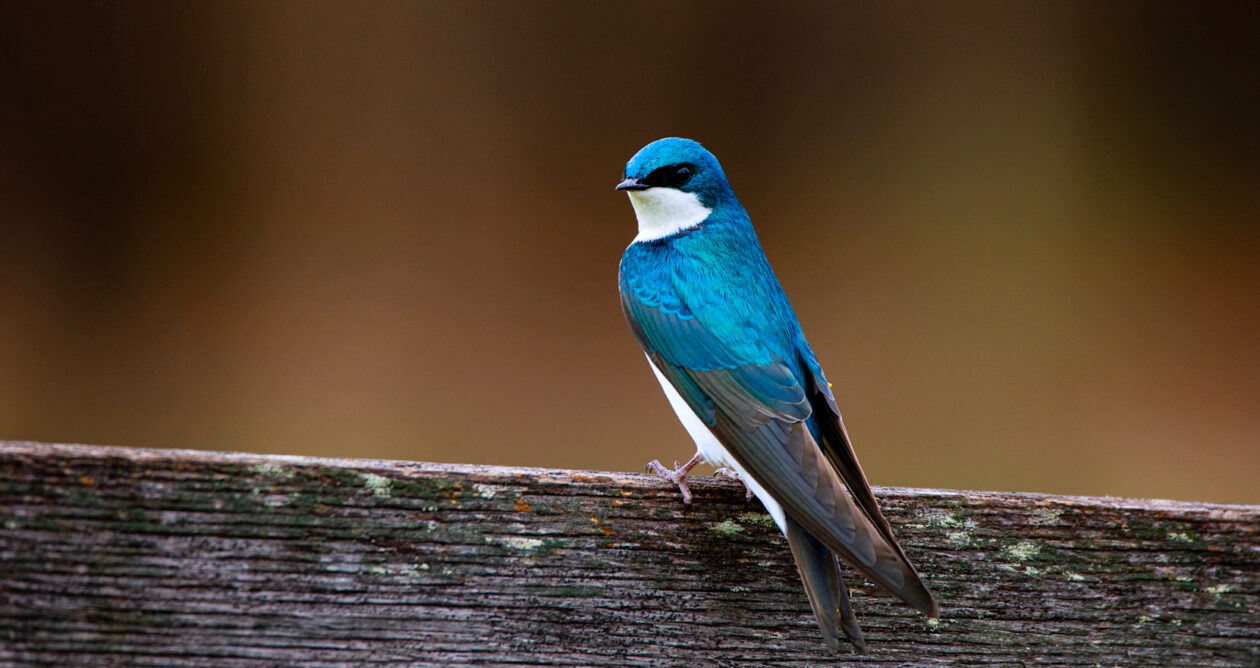
Recently, I took a birding trip to Bass Lake Park to spend time with the Tree Swallows again.
They were busy feeding their little ones and were quite active throughout the morning. Luckily I was able to snap off a few pics and video of this handsome guy sitting on a fence rail. He wasn’t alone however, scroll down to see the other bird species who landed right next to this little guy!
A spring and summer resident of North Carolina, Tree Swallows inhabit open fields near bodies of water such as ponds or marshes, where there is a good amount of flying insects to eat. They nest in the holes of dead and live trees, as well as Bluebird boxes, holes in fence posts, and under the eaves of houses and barns. Their breeding range extends across most of North America, while its winter range stretches from the southern coastlines of the United States into Mexico and Central America.
Come October, Tree Swallows will gather together in huge flocks consisting of thousands of birds to migrate south. For today though, spring has just begun so we’ve still got plenty of opportunities to enjoy these lovely birds in the months ahead!
In my opinion, one of the most difficult birds to photograph in North Carolina are the Blue-gray Gnatcatchers. It’s not that they’re particularly uncommon during the spring(quite the opposite actually), it’s just that they are small and constantly on the move. In fact, these tiny birds hardly ever sit still so I’m always grateful to catch a proper look at one at rest, even if it’s nothing more than a second or two.
Although they will hunt for all kinds of insects they don’t actually eat many gnats (unfortunately, lol!) as their name implies. In fact, their favorite food are spiders and lucky for them we’ve got plenty of those here in the Tarheel state for them to find. As seen in these photos, Blue-Gray Gnatcatchers will glean for arachnids in the mid to upper canopies of trees, raids insects from spiderwebs, and are even known to use their webs as nesting material.
These lovely little ones arrive in late March and stick around until September. The best spots to find Blue-gray Gnatcatchers are in habitats containing a mix of deciduous forests and wetlands, ponds, lakes and rivers. They are particularly active in the morning hours as they need to make up for the loss of calories spent while sleeping by hunting for insects as soon as the sun rises.
Recently, I was asked by Redfin.com to share some advice on how to attract birds to your backyard. Here is an excerpt from the article below..
“Foster a bird haven. The most effective way to attract many different species of birds to your yard is to offer a wide variety of food sources including seeds (especially black oil sunflower seeds), suet, nuts, jelly, sugar water (for hummingbirds) and fruits.
Also consider installing native plants, fruit-bearing trees, and shrubs in varying degrees of density in your backyard to promote an attractive, safe habitat for the birds to forage, roost and nest in.
It’s also a good idea to put out a birdbath or install a small pond garden so that the birds have someplace to bathe, cool off and grab a drink, something that is particularly important during the summer months.
Lastly, make sure that you clean your feeders and birdbath periodically and keep your feeders full. Following these steps, it won’t be long before your backyard will become a bird lover’s paradise!” -Birdwatching N.C.”-
I’m just say’n that this path gives off the Walking Dead vibes and I’m soooo here for it haha! Isn’t it beautiful though? Got in a short hike before work at the the American Tobacco Trail this week and although I enjoyed the “me time”, I found myself considering security (random Zombie herds and otherwise lol) while alone in the woods.
As a female with a slight build, it can be an intimidating prospect to head out into the forest alone. Particularly when carrying camera gear. In fact I had an incident a few years back when someone tried to assault me. I was biking to a birding spot when a dude popped outta the woods with his shorts open. With one hand massaging his junk, he used the other used to grab me as I rode by. He got one hand on my breast and slid it down to try and pull me off my bike.
I couldn’t swerve fast enough to avoid him so I used what I had to stop what ever plans he had. In this case all I had were were some old school heavy-duty binoculars. So I swung them at his head as my bike slid sideways from the force of him pulling down on me. Luckily for me, it ended badly for him as my ‘bins made a satisfying crunch on the side of his skull, stunning him just long enough for me to right my bike and get away.
Today we have options that work a bit better then binoculars in keeping ourselves safe on the trail. Here are some ideas on how people, women particularly, can stay safe while birding, hiking or taking photos in the woods.
Btw, this is not a post intended to say that one solution is better than another. I’m only noting the benefits and risks associated with the choices. It’s up to you to choose the type of self defense solution to utilize and accept the risk of personal responsibility that comes with it. What’s good for me may not be good for you and that’s ok.
*Tell someone where you’re going. Send them a Google map link and the expected time you’ll return. *Be aware of your surroundings! I know it’s difficult when you’re caught up in a good moment but keep your head on a swivel. *Carry your phone and use it to call someone if you feel unsafe. Turn on your “share location” settings so loved ones know where you’re at. *Go with a friend. Join a birding or photography group and enjoy nature with others. There is strength in numbers. *Take some self defense and strength conditioning classes. You don’t need to be a black belt but it’s worth taking the time to learn how to get out of a hold and land a punch or kick effectively. *Carry something to defend yourself.
A word of caution here before moving on, it’s imperative that you research what the laws are in your state when choosing what to carry with you. What’s legal in North Carolina may not be in your state so your mileage may vary. With the responsibility comes risk when deciding to arm yourself. Education and training are key!
*Pepper Spray-A good thing to have at your side when heading out for a hike, Pepper spray is a self defense weapon intended to incapacitate human threats. It is very effective at doing this due to its high concentration of oleoresin capsicum (chemical that causes eye and respiratory irritation) when sprayed at an attacker.
*Bear spray-Although pepper spray and bear spray contain the same active chemical, they are not the same thing. Bear spray has a much lower concentration of oleoresin capsicum. What’s more, bear spray is designed to put out a wide broadcast of spray, filling the air with droplets, discouraging the bear from attacking. On the other hand, pepper spray is a targeted stream designed to incapacitate a person close to you. This being said, bear spray may be your only option as it’s often legal in places where pepper spray isn’t legal to carry so it might be better then nothing.
*Stun gun- Both pepper sprays and stun guns are on average 90% effective as threat deterrents but windy conditions can drastically affect the stopping power of the pepper spray giving someone using a stun gun the edge. Keep in mind that stun guns need to be applied physically to the target for them to be effective. Many people, women especially, (could) have a hard time with that so training is necessary to increase your odds of success if you’re ever tasked with using it.
*Pistol-as a CHP holder, this is my choice in self defense and last-resort douchebag deterrent while in the field. Weather concealed or open carry, it is an equalizer of force in any situation. That being said, proper firearm training is essential (range time & classes) and it’s crucial that you completely understand what the laws are in your state in where you may legally carry BEFORE you head out the door.
*Sword- While you will definitely look intimidating with steel hanging on your back and that blade would be highly effective in thwarting attackers, swords are tough to master in self defense situations so unless your name is Michonne (Queen!) it’s probably best to leave the cutlery at home 😉
PS. For the humor impaired, that last tip about the sword is a joke. I don’t recommend carrying a sword but do recommend that you consider the previous options. Sad that I have to point that out but I expect to lose enough readers/followers/friends with this post and am just covering my bases to weed out the haters.
PPS. The part about Michonne was not a joke. She is awesome.
PPPS. Yes, I am the last person on the planet to finally get around to watching the Walking Dead. I’m on season 8. So far, it’s pretty good.
Have fun, be safe and have a great weekend out there my friends 😉
Another cool looking bird I spotted while standing on Jennettes Pier in Nags Head, NC was this Northern Gannet. These guys are huge and were quite entertaining to watch as they glided like B-52s over the ocean, pausing only plunge into the water below to catch a meal. Once again (like the Dovekie from yesterday’s post), it was tough to capture a pleasing photograph of these handsome creatures because of the distance. Yet, I was thrilled to see them and at least get some kind of photograph of the sightings.
Measuring in at about 3.5ft from wingtip to wingtip, Northern Gannets are one of the largest seabirds in North America. Both male and female adult Gannetts are dressed in a bright white, yellow and black plumage which looks quite beautiful when viewing them against the backdrop of the Atlantic Ocean.
Their body’s are missile-like in shape with long, thin, and tapered wings which they will tuck up against their bodies allowing them to dive quickly into the sea once they spot a fish. They’ve got pointy bills and large webbed feet which make them perfectly suited for a life spent below the waves in pursuit of underwater prey.
The Northern Gannet is a winter resident of the waters off of the coast of North Carolina. You can catch a view of these impressive birds by standing on the beach looking out over the ocean from October through late April/early May. Usually they hunt right offshore but to get the best view of one be sure to bring a good spotting scope or long lens of 600mm or more to really get a great look at these gorgeous birds!
Here’s an interesting bird that I enjoyed seeing at the Pea Island NWR, the Pied billed Grebe. These guys were everywhere! It was neat to watch these spunky little birds harass the Coots for a meal when they’d come up from a dive.
Pied billed Grebes are perfectly built for a life spent under water in pursuit of a meal. Like many species of ducks, Grebes are able to waterproof their feathers by preening them with secretions from an oil gland located at the base of the tail. This means that they can dive consecutively without becoming waterlogged. They’ve also got solid bones which adds to their weight enabling them to dive deeper and remain underwater longer. Grebes have short, narrow wings somewhat reminiscent of that of a Penguin in appearance and and are able compress their feathers by pulling them in close to their bodies which aids their maneuverability when swimming. They are a bit awkward looking on land and aren’t very good at just strolling through a marsh. This is because a Grebe’s legs are located father back on their body to help with propulsion underwater.
Although Pied billed Grebes seem to possess a lot of similarities with ducks they are a part of a larger family of diving birds called Podicipedidae. Their binomial name of Colymbus podiceps is derived from the Latin word Podilymbus, a contraction of podicipes which means “feet at the buttocks or arsefoot” and a Greek words kolymbos, meaning “diver”, and podiceps, meaning “rump-headed”. This makes a lot of sense when you consider their leg placement on their body. Plus it’s amusing to think about a birds name basically meaning “ass footed-rump headed diver” lol!
Pied billed Grebes are a year round resident of North Carolina but are best found in the wintertime when they gather in large numbers in our eastern coastal counties. Look for them in quiet freshwater marshes, near the shorelines of small to medium sized ponds, shallow lakes, or bays with reedy banks and swimming slow moving streams with a brushy shoreline containing cattails.