By Sally Siko
Category Archives: Birding Trips and Tours North Carolina
Ovenbirds in central North Carolina
By Sally Siko
When the summer heat rolls in, it’s nice to get out of the sunny fields and into the woods to cool off.
We aren’t the only ones who appreciate the cool shade that the trees provide, Ovenbirds are masters of the shadows and remain active throughout the day even during the hottest hours.
Ovenbirds favor mixed deciduous and coniferous forest areas which are semi open under the canopy yet still contain scrubby thickets and moderate brush.
Though they look like Thrushes, they’re actually a species of warbler and like others in that family they are voracious eaters of insects.
However like Thrushes, (and unlike most other warblers) Ovenbirds are usually spotted hunting for a meal on the ground scratching up under the leaf litter in search of beetles, worms and grubs.
These beauties are a spring and summertime resident of North Carolina and are found across the state from the mountains to the coast from April to October. That being said, a few Ovenbirds have been found to spend the winter in Buxton Woods on Cape Hatteras Island in recent years. This is an interesting trend to watch as more people get out to go bird watching during the winter in the OBX.
Pretty cool, huh?
Btw, if you’d like to buy this artwork, please check out the Riverside Creations NC shop at
https://www.etsy.com/shop/RiversideCreationsNC
to purchase one of these for your home too!
American Oystercatchers in North Carolina
By Sally Siko
One of my favorite birds to see when visiting the coast of North Carolina are the American Oystercatchers.
I love that intense orange and red color in their eyes and bills! Although they are a relatively common sight, they never fail to capture my attention as they strut along the beach.
I recently photographed this lovely Oystercatcher on Wrightsville Beach while checking in on the nesting colony at the south end of the island.
Although it was super hot out there, it was well worth the time to get low on the sand to photograph these beauties.
American Oystercatchers are a year round resident of southeastern NC with several hundred of them choosing to spend the winter in the Ft.Fisher area each winter.
Each spring, they lay their eggs in shallow depressions in the sand among large nesting colonies of Terns, Skimmers and Plovers.
Unlike it’s nesting neighbors who hunt for fish above the water and dig for shellfish and marine worms on the sandy shoreline, Oystercatchers prefer to look for it’s namesake snack in exposed sand bars and mudflats during low tides. They’ll also forage on rocks, such as those found at jetties and around bridge pilings.
Aren’t they lovely?
Bluebirds in central North Carolina
By Sally Siko
With so many flying around central NC, it’s admittedly easy to overlook an Eastern Bluebird when out on the hunt for something rare. That’s a shame though because these little feathered gems are just gorgeous!
Bluebirds are a staple of our suburban yards, fields and countryside and they are well worth stopping to admire for a few minutes if the opportunity presents itself.
A Bluebird perched on a fence line certainly stands out against the greys, greens and brown hues of their preferred habitats.
But, did you know that in some years their plumage appears brighter than others?
The reason for this is in their responses to weather. In fact, an Eastern Bluebird’s plumage patterns are correlated with the vibrancy of leaf pigments in autumn, and they share the same biological causes.
In the same way that an abundance of sun, rainfall, and frost-less nights bring on the most vibrant autumn leaf colors, these favorable conditions also lead to a plethora of insects and natural forest foods.
Bluebirds feast during harvest season to build the stores of energy that will carry them through the winter—and also to enrich their bodies with nutrients for building strong and healthy feathers.
So while leaves are not directly related to this late-season molt, they coincidentally are a great indicator of the amount of food available to birds from year to year.
Because bluebirds rely on insects as a main source of nourishment, years that have favorable conditions mean lots of available, nutrient-rich food. In short, more bugs can equal more colorful birds.
Photos by @sally_siko of @bestlife_birding on my beloved full frame 50MP beast, the mighty @canonusa #5Ds
Redhead Ducks in North Carolina
By Sally Siko
If there is one bird that who’s photo takes me back to great wintertime birding memories from the OBX, it’s this Redhead Duck!
I love the subtle but beautiful color palette of their cinnamon, black and grey plumage (especially paired with the blues and grays of a winter landscape) and the intense gaze of their orange eyes.
Redhead Ducks are a winter resident of North Carolina. Each November flocks of thousands of Redheads arrive in eastern NC to spend to coldest months in our (usually thawed) waters.
They are best found in shallow bays and marshes foraging for a an underwater snack of stems, seeds, and roots of aquatic plants: shoalgrass, pondweeds, and sedges at many of our coastal wildlife refuges.
One of my favorite things about Redheads are their calls. While most people are familiar with the typical “quacking” of ducks, Redhead ducks can make some unusual noises!
The female Redhead does makes a quack-like noise, but the male’s vocalization can sound like a cat’s meow or purr!
If you’ve ever stood by a pond filled with Redhead drakes, it sounds kinda like being around a bunch of broken cats lol!
Look for them later this year around Thanksgiving. Usually they’ll stick around until late March or early April before they head out to their breeding grounds in the western United States and western Canada.
Btw, if you’d like to buy this painted sign please visit https://www.etsy.com/shop/RiversideCreationsNC
Photos by @sally_siko of @bestlife_birding on my beloved full frame 50MP beast, the mighty @canonusa #5Ds
Spending time with a Yellow-throated warbler in North Carolina
By Sally Siko
When walking through the forests here in central North Carolina, you’ll often hear the familiar calls of a Yellow-throated Warbler echoing down from the tree tops.
If your lucky, you might get a chance to see one up close as sometimes these delightful little birds can be quite curious to our presence in the woods.
Yellow-throated Warblers are gorgeous creatures IMO! Breeding males are particularly striking with that bold black and white plumage set off against a bright yellow patch of feathers on their throats.
I spotted this one singing his heart out while leading a birding tour at Cape Fear Shiners Park in Lillington NC a couple weeks ago.
It was so cool to be able to share this bird with my guests and to see how happy everyone was with their own photos!
Known as “Southern” warbler, Yellow-throated’s breed in the eastern United States but only north to southern New York and (in smaller numbers) west into Iowa yet they are much more commonly found in the Deep South rather than in the mountain regions.
Here in North Carolina you can find the nesting in our coastal and Piedmont counties throughout the summer.
The best places to find these beauties is from mid March - mid October in moist woods and edges, whether in swamps, bottomlands, forests along a lakeshore, streamside groves, or in pinelands; forests with scattered tall pines containing Spanish moss.
Though they are a rare sight in the winter months, Yellow-throated Warblers may also be found mainly in North Carolina’s coastal counties in maritime forests, or in mature pine-hardwood stands, especially where the hardwoods are broadleaf evergreens once the weather turns cold.
Aren’t they lovely?
Photos by @sally_siko of @bestlife_birding on my beloved full frame 50MP beast, the mighty @canonusa #5Ds
Northern Parula summertime sighting in North Carolina
By Sally Siko
Here’s are a couple close up looks of one of my favorite birds, the Northern Parula.
These little ones seem to be everywhere this time of year here in North Carolina.
Aren’t they beautiful?
Though they are tiny (only about 4.5in long!) their relatively easy to find by listening for their high pitched buzzy zeee-zip calls in the mid to high canopies of the trees.
They also respond well to pishing and will sometimes swoop in down low so that they can get a better look at who’s making all that swoooshing noise.
These lovely feathered gems nest over nearly all of the eastern United States and Canada, and not surprisingly it nests in all parts of North Carolina.
Parulas are most commonly spotted in swamps and bottomlands, especially where growths of Spanish moss are found hanging from the trees (their favorite nesting material).
As for the rest of the state, Parulas favor other moist forests and woodlands, such as cove forests; occasionally it does nest in drier forests too.
Leaving in mid October, most Northern Parulas will spend the winter south of the United States. That being said there are a handful of them which will stick around the Tarheel state through early winter so you still have plenty of time to get out there and enjoy them this year!
Photos by @sally_siko of @bestlife_birding on my beloved full frame 50MP beast, the mighty @canonusa #5Ds
A field Sparrow encounter in the Sandhills Gameland preserve North Carolina
By: Sally Siko
Though they aren’t the most colorful bird around, I’m always delighted to encounter Field Sparrows when birding throughout the year in North Carolina.
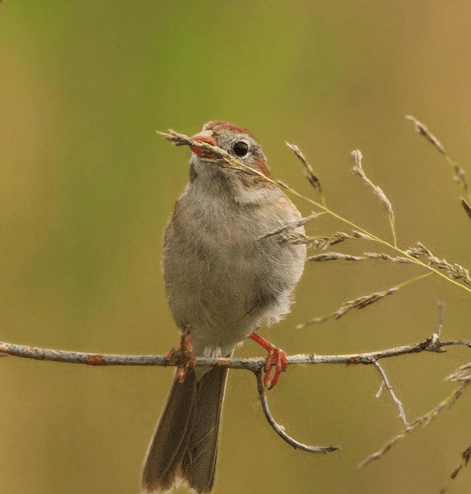
I spotted this little one snacking on some grass seeds near the Sandhills Campground in Hoffman NC.
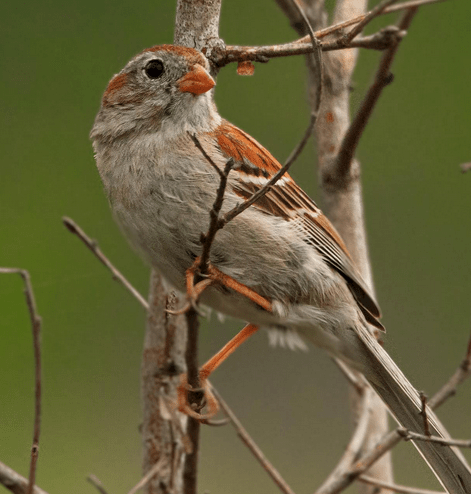
Unlike other species of sparrows which can be tough to identify, Field Sparrows are relatively easy to ID by that white eye ring, orange feet, orange legs and orange beak. They’ve also got a light tannish-orange patch of color behind their eyes and a clear un-spotted grey belly.
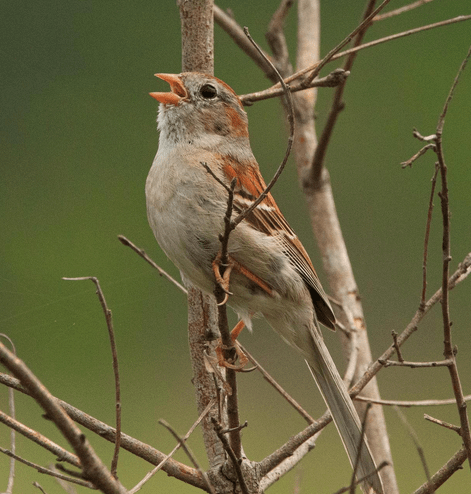
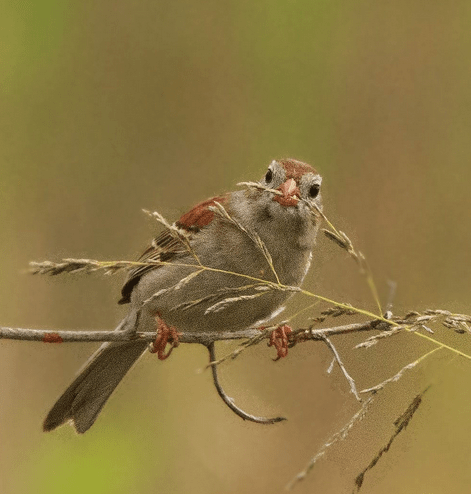
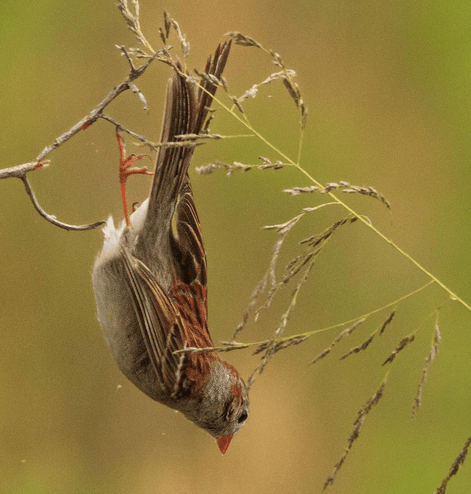
Field Sparrows are best found in overgrown fields, clearcuts, maritime thickets, and woodland borders, always where there is a thick grass and scattered shrubs and saplings.
Their proclivity to spend most of their time in open areas and curious disposition makes them an effortless bird to photograph as I was able to get within just a few feet of this bird without it’s concern.
These lovely feathered gems spend the entire year throughout the state of North Carolina but are generally more commonly found in the spring and summer months.
Aren’t they lovely?
Photos by @sally_siko of @bestlife_birding on my beloved full frame 50MP beast, the mighty @canonusa #5Ds
Orchard Orioles in central NC
By: Sally Siko
One of the joys of summertime birding is to find a family of Orchard Orioles hunting for insects and berries in the field.
I’ve had the pleasure of seeing several this year while leading tours. It’s always a thrill to show off these beauties to my guests!
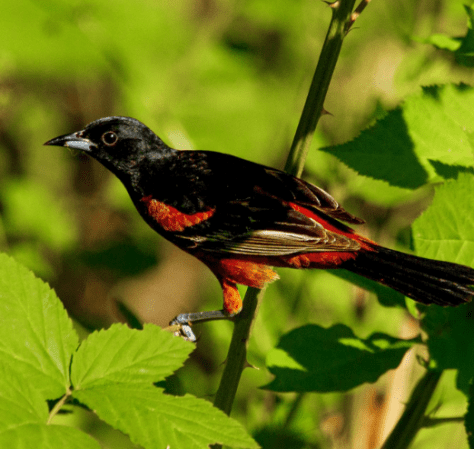
Measuring around 6.5 inches long the Orchard Oriole is the smallest species of oriole in North America. Although they look somewhat similar to their brightly colored cousin the Baltimore Oriole, male Orchard Orioles are more chestnut-reddish toned than the familiar bright orange of the Baltimore.
The female Orchards are equally stunning dressed in their yellow and tan plumage.
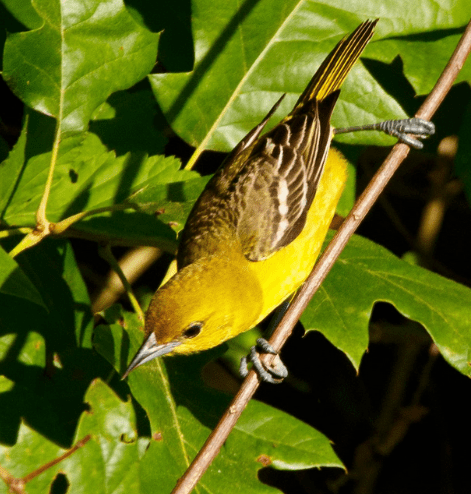
Look for Orchards foraging low to the ground along the tree lines near and in open tall grass fields containing scrub brush.
They one of the earliest-departing species after nesting as their departure for winter migration takes place in late July and August here in central North Carolina.
You’ve still got a couple of months left to see them so get out there while you can!
Photos by @sally_siko of @bestlife_birding on my beloved full frame 50MP beast, the mighty @canonusa #5Ds
Red cockaded Woodpeckers in the Sandhills of NC
By Sally Siko
It’s always a joy to catch a glimpse of a rare bird when out in the field and one of my favorites are the Red cockaded Woodpecker.
I spotted this little one bringing food back to its nest while leading a tour last week in the Sandhills region of North Carolina.
Though it didn’t stick around for very long, it was a delight to be able to share the experience of seeing this feathered gem with my guests!
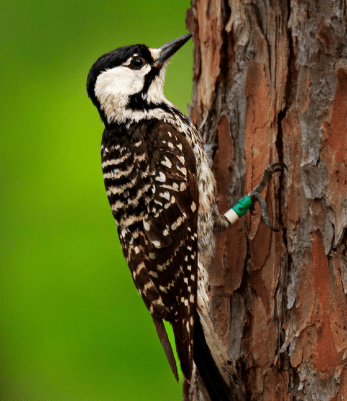
These sweet little birds were once a common sight in the southeastern regions of the United States. Due to loss of habitat, today they are considered an endangered species.The reason why is because Red-cockaded Woodpeckers require a narrow scope of forest conditions to breed. They prefer to nest in mature stands of long leaf pine trees with little or no understory. Unfortunately these old growth forests have faced rapid decline which in turn has led to the decline of this species as well.
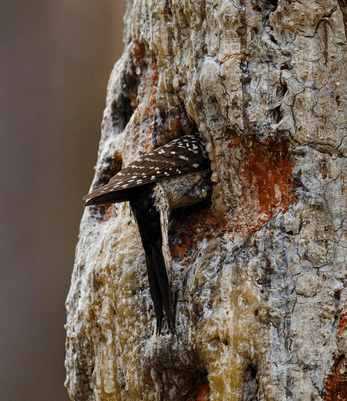
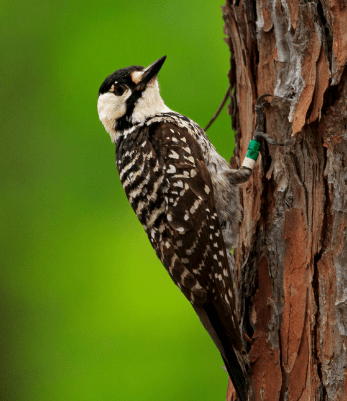
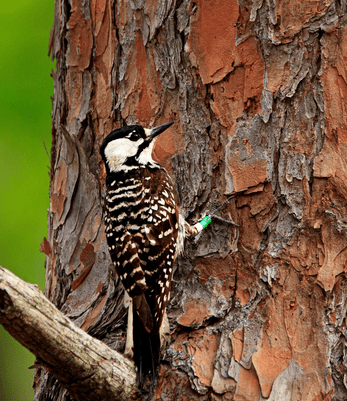
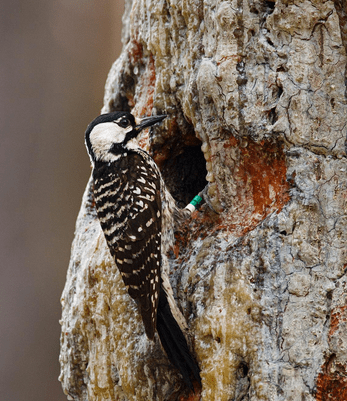
Luckily, the Sandhills region of North Carolina is a special place where several stands of old pine trees are preserved and maintained lending to provide the perfect conditions for the Red-cockaded to nest.
Here you can see them raising their families every spring and throughout the summer months. It’s truly a special place to enjoy these wonderful birds.
I can’t wait to come back for another look!
Photos by @sally_siko of @bestlife_birding on my beloved full frame 50MP beast, the mighty @canonusa #5Ds