
Tag Archives: bestlife birding

A bilateral gynandromorph Northern Cardinal at Bynum Bridge, Pittsboro NC

By Sally Siko

One of the best things about birding is that there’s always a potential to be surprised by something unexpected out in the field.
Case in point, a possible bilateral gynandromorph variation of a Northern Cardinal which I photographed last week at Bynum Bridge in Pittsboro NC.


If you look closely at the photos you can see that it’s colors are split right down the middle with bright red, male plumage on one side and buff-brown, female plumage on the other.


So, how does a Northern Cardinal end up being dual-plumaged?
It involves a cocktail of chromosomes, which work slightly differently than the X and Y sex chromosomes that mammals carry.
Female birds carry both sex chromosomes — which in birds are labeled W and Z — while males carry two Zs.
Gynandromorphy is thought to occur when female egg cells develop with two nuclei — so that one nucleus contains a single Z chromosome and the other contains a single W.
When that egg is fertilized by sperm carrying two male Z chromosomes, the egg develops with both ZZ (male) and ZW (female) chromosomes.
The bird then develops with half of its body containing male ZZ cells while the other half contains female ZW cells.
If this chromosomal mix-up occurs early on in the animal’s development, before many of their cells begin to divide, it can result in the sort of perfect bilateral split which may be the case seen in this bird.


In addition another thing that fascinated me was that I managed to capture a photo of the Cardinal with it’s male mate during a food exchange. Then the bird flew down into a shrub and settled onto a nest!
As it turns out, gynandromorphic birds will sometimes have at least one functioning ovary which means that they can lay eggs and reproduce.
Pretty neat huh?

Photos by @sally_siko of @bestlife_birding on my beloved full frame 50MP beast, the mighty @canonusa #5Ds
A Cerulean Warbler in Lexington, KY

By Sally Siko

As a birder & photographer, I’m always excited to see & photograph a new species whenever I get lucky enough to add a lifer to my list.
Weirdly enough, it seems that every time this happens my photos aren’t very good lol!


I don’t know if it’s the excitement of seeing something for the first time that throws me off my photo game or just bad luck with lighting and angle but this happens to me a lot.
Case in point, my first photos of a Cerulean Warbler that I found while on a birding trip in eastern KY.
While I was very, very happy to finally lay eyes on this gorgeous bird, it stayed high up in the canopy of the trees, backlit under bright sunshine or perching in the shadows of the leaves. Not great conditions for getting quality portraits but certainly good enough for an ID and the making of wonderful memories 🙂


The aptly named Cerulean Warbler is indeed a handsome bird with adult males sporting that light (cerulean) blue, white and black plumage.
Females are equally as lovely adorned with a greenish blue upper body plumage with a yellowish green underside.
From a distance or in poor lighting conditions I’ve found it’s possible to mistake a male Cerulean with a Black and White Warbler until the bird comes out into the sunlight.

With populations of this species in decline (due to habitat loss) it can be somewhat challenging to find these shy warblers.
Your best best to spot one is to search the mid to high canopies of the trees during the summer breeding season on the east coast. Ceruleans prefer to hang out in mature deciduous forests throughout the eastern United States, but are particularly abundant in oak-dominated forests that contain canopy gaps and a complex canopy structure.
Look for them in Kentucky from late April through early August.

Photos by @sally_siko of @bestlife_birding on my beloved full frame 50MP beast, the mighty @canonusa #5Ds

A Scissor tailed Flycatcher at Ft.Fisher NC

By Sally Siko

Happy to have caught a few good shots of a rarity in North Carolina, a Scissor-tailed flycatcher!
I was lucky to spot it last month along the ATV / off road beach access trail at Ft. Fisher.


I’d spent a few minutes walking along the adjacent Basin Trail when the path veered left towards the beach.
Knowing that flycatcher’s typically like to perch on places which give them maximum visibility in open areas (fences, power lines ect.), I decided to head towards the beach and out of the marine scrub forest.
As it turned out, this was the right move because I spotted the flycatcher just a few yards ahead on the right, sitting on a post in the dunes next to the trail.


Affectionately nicknamed the Texas bird-of-paradise, these long-tailed birds are members of the kingbird family.
Measuring nearly 14in long, Scissor-tailed Flycatchers are relatively large birds. Not surprisingly though, half of their total body length is that deeply forked black and white tail that is nearly a nearly unmistakable ID point when referencing them in the field.

The reason why this bird is a special sighting in the Tarheel State is because their range typically extends from eastern Colorado and Nebraska down south to Texas and Western Louisiana. Isolated breeding patches of these feathered gems have been found in Mississippi, Alabama and Tennessee.
Why it’s shown up in southeastern NC is anyone guess!
I hope that I’ll encounter this beautiful species again next spring during my High Island TX birding tour (learn more about this trip here!) because I’d love to share the experience of seeing one for the first time with my east coast guests 🙂

Photos by @sally_siko of @bestlife_birding on my beloved full frame 50MP beast, the mighty @canonusa #5Ds

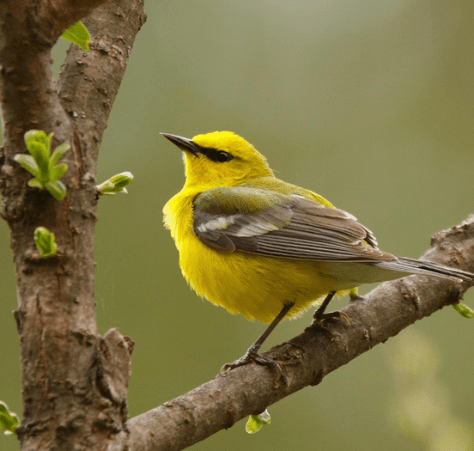
A Blue winged Warbler encounter in Bowen, Kentucky

By Sally Siko

By far, one of the prettiest birds I was lucky to find last week while birding in eastern KY was this Blue winged Warbler.
I’d been trying to photograph one for years without success so it was super exciting to finally add this lifer to my list!
Funny thing was that the first one I saw (at Lakeview Park in Lexington, KY) I actually missed my shots completely resulting in blurry unusable photos.
Happily though I got another chance a couple days later in Bowen, KY to grab this series of portraits of a Blue winged hunting for a meal in the brush.


During the spring and summer months, you can hear a Blue winged Warblers familiar call of “beeee-buzzzz zzza zzza” song when walking in a grassy field lining a wooded area containing thick underbrush. They’ll often pop out from the dark thickets at the woods edge into the open to flutter on the edges of trees and bushes in an effort to glean insects hiding in the leaves.


In the past their breeding range extended from the open woodlands of Tennessee, Kentucky, West Virginia northern Alabama, and northern Georgia.
Today, Blue-winged Warblers have been expanding northward and now can be found throughout southern New England, southern Ontario, and the southern portions of the Great Lakes states.
In fact some of the highest breeding densities of Blue wings can be found in the higher elevations of the Appalachian Mountains, in the norther tier of the mid-Atlantic states, and even as far west as Wisconsin and Michigan.

Aren’t they lovely?

Photos by @sally_siko of @bestlife_birding on my beloved full frame 50MP beast, the mighty @canonusa #5Ds