Tag Archives: birdwatching south carolina

Anhinga fish flipping

By Sally Siko

One of the most fascinating species of birds that I enjoy photographing are Anhingas.
While on a recent birding trip at Huntington Beach State Park I was lucky enough to observe this one using its sharp bill to spear a fish, flip it into the air, and then swallow it head-first!


Anhingas are actually a species that is on the increase here in the Tarheel State. They favor habitats containing freshwater with cypress trees and are most often spotted hunting for a meal in swamps, ponds and lakes in the coastal plain and in the eastern Piedmont regions.


As you may have guessed, Anhingas eat a wide range of aquatic creatures such as fish, crayfish, small invertebrates, insects, and frogs.
Masters of underwater hunting expeditions, they are super entertaining to watch wrangling a meal.
In fact, they’ve evolved with some unique ways to hunt underwater more efficiently.

For one, they lack the water proofing oils found in duck species. Since (surprisingly) they’re not the strongest swimmers, they become waterlogged once their feathers become saturated. This added weight allows the Anhinga to dive deeper than it could if it was waterproof.

Another specialized feature of the Anhinga is that they do not have nostrils. This adaptation means they’ve got no worries about accidentally breathing in water while hunting below the surface.

As for the fish flipping technique shown here?
Well by tossing the fish into the air, the Anhinga is trying to manipulate its prey into a head-first downward position so that the fish doesn’t get caught in its throat.
Pretty cool, huh?

I think that it’s neat that a bird that looks like it belongs in the Jurassic Period would actually be the one species which is holding the latest in cutting edge freshwater hunting physiology, lol!

Photos by @sally_siko of @birdwatching_nc on the full frame beast of an SLR, the mighty @canonusa
#5Ds
Black Swans in South Carolina

I finally experienced my first Black Swan event…


Nope, I wasn’t filled with a sense of uneasiness or foreboding normally associated with the term, rather I was elated to finally have an opportunity to photograph these lovely birds for the first time.
As was the case with the Mute Swans I posted late last year, I spotted this pair of Black Swans near a roadside pond along Rt.17 near Murrells Inlet SC.

Black Swans are not native to the Carolina’s. They are found in southern regions of Australia and have also been introduced into England and Japan. Most of the ones spotted here in the United States are either captive farm birds or escapees who have found a home in the wild.
With those intense orange eyes, onyx plumage, a wingspan reaching 6.6ft and a weight of nearly 20lbs, these beauties are impressive birds to catch a good look at.


Although I’ve seen Black Swans in the past, I’d never had a camera in hand during the encounter so it was really cool to be able to photograph this intense looking species up close.

Photos by @sally_siko of @birdwatching_nc on my beloved beast, the mighty mirrorless @canonusa#R5

Wintertime Limpkin sighting in South Carolina

Recently I took a quick trip down Murrells Inlet SC to see what kinds of birds were spending the winter south off the Raleigh area.
One species in particular I looking forward too seeing again were this pair of Limpkins which have been calling a neighborhood drainage pond in SC home over the past year.


The fact that these birds are here in South Carolina is pretty special because the Limpkins typical home range extends from south Florida to central and South America.
But what is the thing that is keeping them here?


The answer is snails.
Apple Snails to be precise!
While they certainly consume a fair amount of mollusks, worms, amphibians and insects the Limpkins favorite food is the Giant Apple Snail.
In fact their bills are bent and twisted at the tip, a unique physical adaptation solely developed for removing the snails from the shell.
Even during courtship the Apple Snail plays a part as the males will feed their mates the slimy snack in an effort to win her affection.
Apparently that tactic has worked in the case of these two birds since they successfully nested and raised several chicks in this location last year.


I’m hoping that this spring will yield another successful nesting season for the pair and am looking forward to seeing little ones running around the shoreline in May.

Photos by @sally_siko of @birdwatching_nc on my beloved beast, the mighty mirrorless @canonusa #R5

Hooded Mergansers at Huntington Beach State Park, SC

Of of the most striking looking ducks we’ve got swimming around the Carolinas is the Hooded Merganser. With that huge crown of feathers at the top of their heads, these handsome birds are truly kings of the water.
I spotted this small flock last month while birding at Huntington Beach State Park in Murrells Inlet, SC.
It was able to get relatively close to these guys from my vantage point on the boardwalk over the marsh which was pretty neat!


Hooded Mergansers are a species species of diving duck with a somewhat unusual diet in that they do not eat much plant material. Instead they prefer to snack on small fish, crawfish, and aquatic insects.In addition, they’ve got long serrated beaks which aid in the capture and consumption of their underwater prey.
The tidal marsh habitat where I photographed these birds served as the perfect hunting grounds for the Mergansers.


Though many of us associate Mergansers as being a wintertime visitor to NC, they are known to breed in our eastern counties making them a year round resident of the Carolina’s.
Like Wood Ducks, they are cavity-nesters but unlike Wood Ducks, Mergansers often lay their eggs in other females’ nests. This is behavior is similar to the practice of Brown-headed Cowbirds, except that the ducks only lay eggs in nests of their own species.
Pretty neat, huh?

Photos by me @sally_siko of @birdwatching_nc on my beloved beast, the mighty mirrorless @canonusa #R5

The Limpkins are spending the winter in Socastee SC

By: Sally Siko

While location scouting in preparation for a recent birding trip to Murrells Inlet SC, I decided to take a quick drive north to check up on the pair of Limpkins that I’d found a few months ago to see if they were still in the same location.
Though it took about an hour of searching in a swampy area / ponds adjacent to a suburban neighborhood, I was extremely happy to find the Limpkins a full 24 hours before my guest was to scheduled to arrive.


Rolling up on the first spot on tour day it only took like 3 seconds for me to re-find the bird.
It was a real thrill to be able to share this lovely creature with my tour guests,

This Limpkin and it’s mate are pretty far away from their normal home range which typically only extends north from South America into Florida. From what I’ve heard from local reports, this pair actually nested here this past summer and successfully raised a few chicks.
In fact this isn’t the only pair who have been found in SC. In recent years other Limpkins have been sighted as far inland as the Goose Creek reservoir including a breeding pair which was the first ever nest recorded in the state.


It seems clear that these Limpkins are comfortable enough to spend the winter in South Carolina thanks to the mild winter temperatures & ample supply of their favorite food (Apple Snails) found in the ponds and nearby swamp.
If you look closely at a couple of the photos you can see these large snail shells near the Limpkins feet.
It’s going to be interesting to see if the pair remains to nest here again in the spring.
I’m the meantime, I plan on checking in on these beauties several times over the winter and will provide updates on their status throughout the season ahead.

Photos by @sally_siko of @birdwatching_nc on my mighty megapixel monster, the @canonusa #5Ds

Spending time with a Barred Owl at the Huntington Beach State Park Murrells Inlet, SC

By: Sally Siko- Admin BWNC

One of the best things about birding is that you never quite know with 100% certainty what you’re going to encounter in the woods.
Sure, we’ve got our expectations but every so often we are presented with the opportunity to be surprised and delighted by what we see.
I this case, I was so happy to spot this handsome Barred Owl hunting for a snack this past weekend while on a trip to the Huntington Beach State Park in Murrells Inlet SC.


It was thrilling to get a close up look at such an impressive bird. At one point, I was showing the owl to some other photographers when it took off and zoomed about a foot over our heads only to land briefly to catch an insect on the side of branch. Then it quickly flew to a nearby tree to consume its prize much to the delight of all.


Barred Owls are a year round resident of South and North Carolina and are widely found across both states.
They are primarily found wetland areas, such as around beaver ponds and in open swamps, bottomlands, and nearby marshes. I spotted this one in the woods across the road from the Nature Center at HBSP not far from the marsh boardwalk area.


I think my favorite part of this encounter was that I was able to get a nice close up look at the owls expressive eyes.
They are beautiful!


Speaking of their eyes, did you know that can not turn their eyes in any direction at all?
This is because owls don’t have eyeballs in the traditional sense.
Instead an owls eyes are shaped like fixed tubes, almost like binoculars.
In order to compensate for the lack of directional movement, they can turn their head 270 degrees.
We can rotate our heads only half that far. Incredible!

Photos by @sally_siko of @birdwatching_nc on my beloved beast of a DSLR the @canonusa #5Ds

Wild Mute Swans in Murrells Inlet SC

After a long day of birding in Murrells Inlet SC, I decided to take a quick trip north up Rt.17 to Myrtle Beach to pick up some dinner.
If you’re unfamiliar with the area, Rt. 17 is a heavily trafficked highway that passes by several strip malls and shopping centers which seem to be busy throughout the day and evening.


When I was about a mile or so from my destination, the GPS directed me to exit to the left to drive through an access rd which actually passed between a Lowes Home Improvement Store parking lot and Rt.17.
Though it was already dark outside, something caught my eye in a narrow water retention pond (read big roadside ditch full of water lol!) which was located between Rt.17 and the Lowes parking lot…
Mute Swans!

I quickly parked my car and grabbed my camera out of the bag and walked over to the “pond” to get a better look.
Cars zooming behind me with curious onlookers, just a few feet down the short slope were 5 Mute Swans swimming peacefully in the shallow water. They were feeding on something under the water and appeared to be completely at ease despite the fact that they were surrounded on all sides by traffic noise and lights.
Isn’t that remarkable?
Not wanting to disturb them into wandering into the road, I quickly snapped off a couple shots and then headed on my way to pick up my meal.

*Btw, this is what ISO 5000 looks like shooting on a long lens at 600mm in the dark using street lights for ambiance looks like.
My Canon R5 did a pretty good job I think 🙂


Mute Swans are native to Europe and were introduced to the United States in the 1800s as an ornamental species to grace the gardens of estates and parks.
As it goes with birds, many escaped and now growing populations of feral Mute Swans are found in New England and south along the mid Atlantic coast.
Now here’s the thing, I’ve seen many Mute Swans over the years at farms and zoos so these birds weren’t “lifers” for me in the strict sense.
Yet, this was the first time I’d ever observed this elegant beauty in the wild so I thought it was pretty cool just the same.

Photos by @sally_siko of @birdwatching_nc on the mighty mirrorless monster of a camera, the @canonusa
#R5

Bald Eagles and Ospreys at Huntington Beach State Park

It’s always a treat to spend time with the Carolinas two largest raptor species, the Bald Eagle and an Osprey.
I spotted these impressive creatures while birding at Huntington Beach State Park in Murrells Inlet SC last week.
Both birds favored perching on the top of the same dead tree along Jetty Drive offering me good views throughout the day.


Though these two shared the same roosting site, as seen in the last few photos of this post Bald Eagles and Ospreys are often seen competing with each other for food.
In fact, I even got to watch a Bald Eagle harassing an Osprey to drop its fish into the ocean.
Once the fish hit the water, the Bald Eagle swooped down to retrieve the Ospreys prize.


Bald Eagles are year round residents of North and South Carolina. They are found across both states from the mountains to the coast and are best spotted near large lakes and rivers. Thanks to conservation efforts, Bald Eagle numbers have been on the rise over the past 20 years so although they aren’t necessarily a common species of bird, your chances of seeing them in the Carolinas are pretty good!


If you’re looking to find an Osprey in the winter, your best bet is to head to the coast of South Carolina as this is the northern boundary of their wintering range.


During the rest of the year, Ospreys are found in both states hunting on rivers, freshwater lakes and ponds as well as in our coastal counties over marshes and along the Atlantic coastline.

Photos by @sally_siko of @birdwatching_nc on the mighty mirrorless monster of a camera, the @canonusa
#R5

Little Blue Herons at Huntington Beach State Park

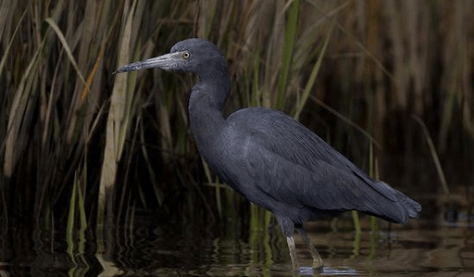
Check out these beautiful Little Blue Herons!
I spotted them last week while birding at the Huntington Beach State Park.
It was particularly nice to catch a good look at the adult bird because usually all I see out there are immature Little Blues.
Not that there’s anything wrong with enjoying time with the little ones lol, it’s just I’ve been wanting to get a photo of an adult all year and hadn’t had much of an opportunity to do so until then.


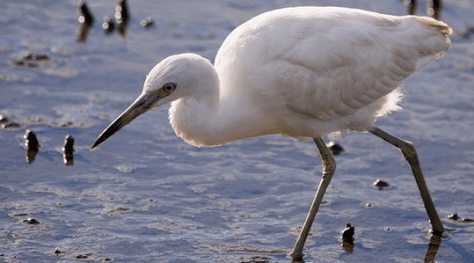
As seen in this photo below, the young birds are dressed in entirely white plumage (with a tiny tinge of grey showing on the tips of their primary’s) during their first year.


Immature Little Blue Herons are easily confused with other white colored wading shorebirds such as the Snowy Egret.
The best way to tell them apart is to check leg color (black/ Snowy Egret vs. greenish yellow Little Blue Heron).

If your unable to discern the color of the birds legs then body language & posture is a reliable way to tell the two species apart.
Snowy Egrets tend to be very active while foraging. They appear to walk erratically, raising their heads to stand fully upright often to scan the water surface, they are always on the move.
Little Blue Herons are methodical hunters. They walk deliberately with their heads pointed down towards the mud or water while moving at a slow pace, rarely standing upright for more than a second or two.


These elegant birds are permanent residents of North Carolina’s coastal counties. Although a small number of them spend the winter here, as a migratory species they occur more numerously in the spring and summer months.
Look for Little Blue Herons hunting at the edges of freshwater ponds, brackish marshes and on mudflats from March to October.

Photos by @sally_siko of @birdwatching_nc on the mighty mirrorless monster of a camera, the @canonusa
#R5

Spending time with Clapper Rails at Huntington Beach State Park