Tag Archives: birding tours north carolina

Field Sparrows at Mid Pines Rd

It’s always a delight to catch a couple photos of a Field Sparrow. I caught a glimpse of this little gem on Friday afternoon at Mid Pines Rd in Raleigh.
This species has that prominent white eye ring making them easily identifiable which is a very good thing when trying to figure what kind of sparrow you’re looking at.
Plus the white feathers around their eyes give them a sweet faced look that never fails to make me smile whenever I encounter one.
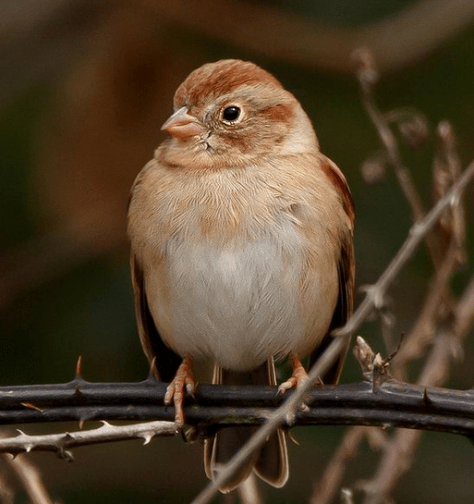


Field Sparrows are a year round resident of North Carolina, yet here in the central part of the state they appear to be found more numerously during the autumn and winter months.
Although they are known nest across the state, the numbers of Field Sparrows sighted in the breeding seasons have been in steady decline over the past 20 years. The exact reasons for the dip in are still unclear but the downward trend seems to follow a similar path to the decline in Bobwhite numbers which I would suppose has to do with the loss of rural & agricultural habitat that both species rely on.
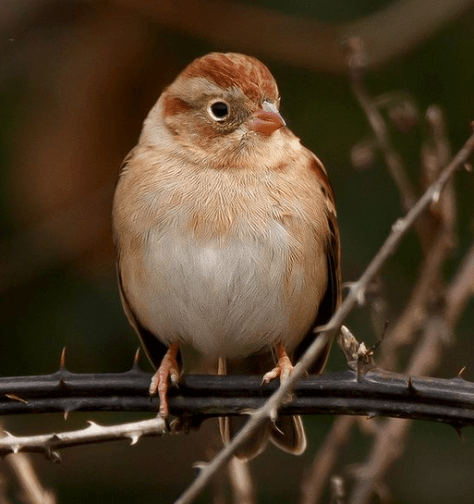
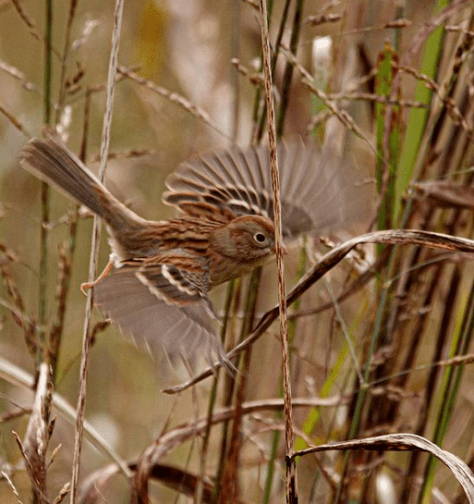

As you’d expect, Field Sparrows are found in tall grassy open areas, overgrown fields, hedge line brush and maritime thickets. The roadside fence line along Mid Pines Rd. adjacent to the cow pastures is the perfect place to spot these guys.
Grass seeds make up less than 50% of their diet in the summer, but more than 90% in the winter. In the summer they also take adult and larval insects and spiders.
Field Sparrows forage on the ground, but look for flocks of them in the grass near some form of plant cover where they can quickly fly into if they need to hide.

Photos by @sally_siko of @birdwatching_nc on my magnificent megapixel monster, the mighty @canonusa #5Ds
Coopers Hawk vs. Sharp-shinned Hawk at Jordan Lake

So every now and then I goof up an ID….
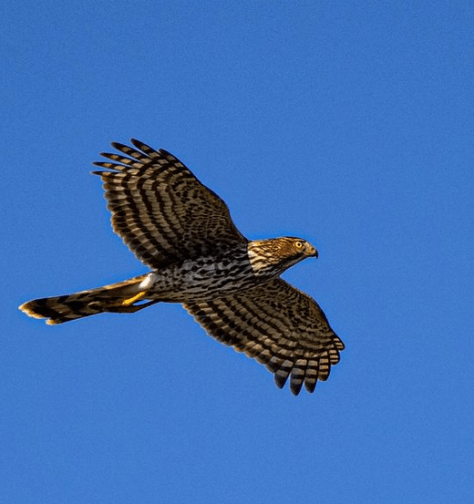
Recently I was birding at Ebenezer Point at Jordan Lake SRA with a group of fellow bird lovers when we spotted a hawk being pursued by a crow.
I was pretty sure it was a Sharp shinned at the time and even pointed it out to the folks with me. ( Ooof! 🤦‍♀️)
Yet once I returned home and was able to get a better look at the bird in the photos, I realized that it was a Coopers Hawk, not a Sharp shinned!

My mistake was in looking at the bird as a whole and (incorrectly) determining that he was slimmer in appearance than he really was.
The field marks that point towards Cooper’s hawk are it’s rounded off tail & somewhat larger head (in relation to its body).
Plus, the most obvious fact that this bird was nearly as large as the crow which definitely points towards a Coopers Hawk vs. a Sharp shinned.


As it goes with any challenge worth pursuing, sometimes the quickest way to get something right consistently is to be wrong from time to time and learn from our mistakes along the way.
Happy birding my friends!

-Sally

Photos by @sally_siko of @birdwatching_nc on my mighty megapixel monster the @canonusa#R5

An encounter with a Common Grackle at the Alligator River NWR

While on a recent visit to the Alligator River NWR in East Lake, NC I spotted a flock of Common Grackles roosting in the trees next to the cornfields.
It was dark and with rain clouds threatening overhead and a stiff wind blowing which is why this bird was taking cover in the canopy instead of feeding on the spilt grain below.


Normally these interesting birds take flight as soon as someone approaches so I counted myself lucky to get in a few shots of a Grackle preening at a relatively close range.
Grasping a feather in his beak, he’d comb through his glossy black plumage and then fluff out his feathers and give a shake every now and again. He repeated this process until he was sleek & clean then flew off deeper into the woods to join the rest of his flock calling from the trees.


Common Grackle’s are a year round resident of North Carolina and are found in varying number’s throughout all 100 of our counties.
They are particularly numerous in the eastern part of the state where they may be found eating on the ground in large flocks along roadsides, suburban lawns and in farm fields.
“Common” though they may be, I still think they are lovely!

Photos by @sally_siko of @birdwatching_nc on my mighty megapixel monster the @canonusa #R5

Yellow-throated Warbler autumn migration at Jordan Lake SRA

Here’s another bird I’ve been seeing in higher numbers this year, the Yellow-throated Warbler.
These little gems seem to pop up everywhere I’ve gone birding in North Carolina since May and I couldn’t be happier about it 🙂


I spotted the bird in the first photo a few days ago at Ebenezer Point in Pittsboro NC and the second bird this past May at Yates Mill Park in Raleigh NC.

Perhaps the reason why “warbler neck” is a thing, Yellow-throated Warblers are best spotted in the mid to high canopy of the trees searching for insects and spiders as they pry into crevices along branches.
Unlike other warblers that move quickly and sporadically while hunting for food, Yellow-throated’s are slower moving and deliberate when hunting as they scour the branches, leaves, and ground for a snack.
This makes them a bit easier to observe and photograph which is always nice lol!

Arriving in late March Yellow-throated Warblers may be found throughout most of the state however they are somewhat more common in our eastern counties.
Look for Yellow-throated’s in varied habitats like dry pine stands and also in the tall trees growing along shorelines of ponds, lakes and streams. They are also fond of swampy areas too which makes for a pretty diverse range of opportunities in which to find them.
Unfortunately they will be leaving NC soon to head south for the winter so try and get out and see them this week or you’ll have to wait until spring to enjoy these delightful little birds again.

Photos by @sally_siko of @birdwatching_nc on my twin mighty megapixel dragons the @canonusa#R5 & the #5Ds

Enjoying the Cape May Warblers at Jordan Lake SRA

It’s not often that I’ll post the same species of bird twice in a week but there were tons of Cape May Warblers putting on a show at Ebenezer Point at Jordan Lake in Pittsboro North Carolina recently.
It was great to see so many of them flitting through the trees, chasing each other while feasting any six or eight legged snack that dared cross their path in the canopy.


These lovely warblers were named for the county of Cape May, NJ where the species was first noted in scientific literature.
Sitting at the southern tip of New Jersey, bordering the Delaware Bay and the Atlantic, Cape May county is the premier destination for migrating birds along the east coast of the US.

Though Cape May Warblers stop in NJ when traveling between their breeding & wintering grounds, they are hardly alone as hundreds of different bird species are found in Cape May county every year during each migration cycles.
It seems like an odd name to give these beauties as it hardly describes any of the species unique characteristics.


Given the Cape May’s preference for nesting & feeding in conifer forests, perhaps a better name might be spruce warbler or maybe even tiger warbler since they sport those bold black stripes on it’s warm yellow breast.
Moniker choice aside, these feathered gems are standout birds in my eyes and I’m always grateful to catch a glimpse of Cape May every autumn.

Photos by @sally_siko of @birdwatching_nc on the mighty mirrorless monster of a camera, the @canonusa
#R5

Winter North Carolina birdwatching tours coming soon

Can you feel it?
The cool breeze seeping in under the still warm sun and crisp blue skies.
The leaves starting to lose those vibrant greens in the west, fading ever so gently into muted tones soon to blaze red & gold into brown.
Yes.
Autumn is here in the Carolinas and following on its heels, the most wonderful time of year…
Weird duck season!!!


Today we’re all concentrating on the fall migrational movements of Warblers and other songbirds but in my opinion, winter will bring my favorite feathered gems to North Carolina.
Redheads, American Wigeons, Green winged Teal, Blue winged Teal, Snow Geese, Tundra Swans, Canvasbacks, Eiders, Pintails, Northern Shovelers and more waiting to delight us once the weather turns cold.


I’ve made the decision to spend as much time as I can this winter traveling to our coastal counties this winter to photograph and share as many duck species as I can from November to February.
Although I’ve got a pretty good idea of what I can expect to find out there, there’s always the potential to be surprised and delighted by something new floating out there in the water (or something furry hiding in a cornfield, lol!).

Wanna join me?
After all, birding & bird photography is better with friends!
Birders / Photographers of all skill levels are welcome and I’ll be sharing plenty of tips along the way.
Check out the link below for my winter tour schedule to book your date.

https://birdwatchingnc.com/birdwatching-n-c-trips-birding-in-north-carolina/


If you have any questions about the details of my trips shoot me an email anytime.
See ya out there!
-Sally

Photos by @sally_siko of @birdwatching_nc on the mighty @canonusa
#5ds

Spending time with a Yellow-throated Vireo at Brumley Nature Preserve

Every once in a while, I start seeing certain species of birds more often than others.
In this case I’ve noticed Yellow-throated Vireos seem to be flying around NC in greater numbers than in the past 5 years.
I spotted this one snacking on a caterpillar at the Brumley North Nature Preserve this past weekend.


While I don’t know the exact reason for the influx (it could just be luck-right place/right time scenario) I’m certainly happy to to have the opportunity to photograph them again without much effort.

Yellow-throated Vireos favor a different habitat preference to their more often seen relative, the White-eyed Vireo. They tend to shun pine barrens are best found foraging in the high canopy’s of the treetops in old growth deciduous forests and occasionally near wooded streams.
Interestingly, the Yellow-throated and White-throated Vireos share similar calls so finding one isn’t too difficult if you know what to listen for depending on if your in the woods vs. the field.


These cheerful little guys will stick around NC for just about a week or so before heading to their wintering grounds in Central and South America, south Florida and on through to the coast of Texas.
Get out and enjoy them while you can!

Photos by @sally_siko of @birdwatching_nc on the mighty mirrorless monster of a camera, the @canonusa
#R5

Cape May Warblers at Bynum Bridge Pittsboro NC

The Cape May Warblers have returned to central NC and I couldn’t be happier to see these sweet birds again.


I spotted this one and several others at Bynum Bridge in Pittsboro a few weeks ago after a quick trip to Brumley North.
It was neat to watch them as they flitted through the branches in search of a meal.

Cape Mays are lovely creatures.
They breed across northern Canada in forests of spruce and balsam fir, especially in areas where their favorite food (the spruce budworm) is abundant.
Every spring, thousands of them make the journey north to their nesting grounds stopping in western NC along the way.
When autumn arrives they tend to spread out a bit more and are often sighted in central and eastern NC as well.

Usually the Cape May’s are spotted hunting in the upper canopy layer of the trees which is why having access to an elevated viewing area (as which is found at Bynum Bridge) is helpful if you’d like to get a good look at one.
That being said, they’ll be headed to their wintering grounds in the West Indies and Central America soon so get out there while you can through mid October.

Photos by @sally_siko of @birdwatching_nc on the mighty mirrorless monster of a camera, the @canonusa
#R5

A Green Heron encounter at the Pee Dee NWR

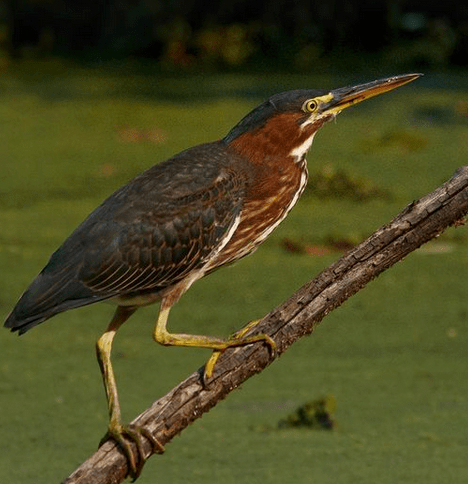
If you get the chance, it’s nice to take a few minutes to sit and watch a Green Heron hunting for a meal.
I spotted this handsome guy while on a birding trip at the Pee Dee NWR in Wadesboro NC last weekend.
He moved slowly, one foot methodically placed over the other, creeping at a snails pace as not to alert its prey hidden below the surface of the murky water below.
The Heron struck twice but came up empty both times. Undeterred, he kept at at it eventually landing a small fish a little further out into the pond.

Like most other Heron species, Green’s prefer to spend their time wetland habitats such as marshes, bogs, swamps, creeks, ponds and lakes. Their diet consists of fish, frogs, toads, salamanders, snakes, crayfish, insects and even small rodents when the opportunity presents itself.
During the winter, they’ll hunt for prey in brackish water so small crustaceans and mollusks will be on their menu too.

These handsome birds are found throughout the Tarheel state from March to October so you’ve still got plenty of time to go see one this year.
That being said, a few Green Herons have been reported to spend the wintertime in our southeastern coastal counties which is pretty neat!

Photos by @sally_siko of @birdwatching_nc on the full frame beast of an SLR, the mighty @canonusa
#5Ds

Spending time with Black Skimmers on Wrightsville Beach N.C.

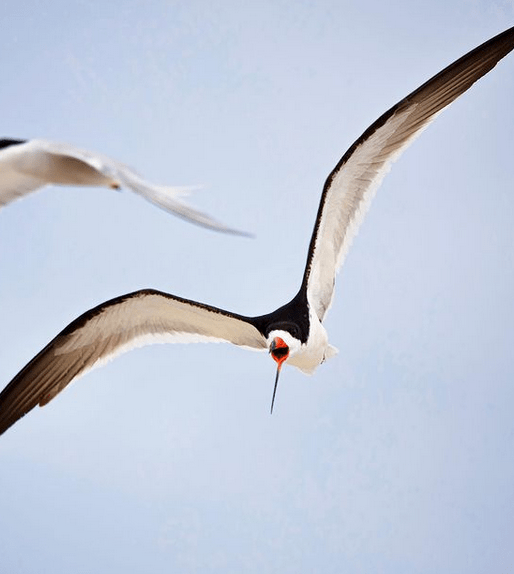
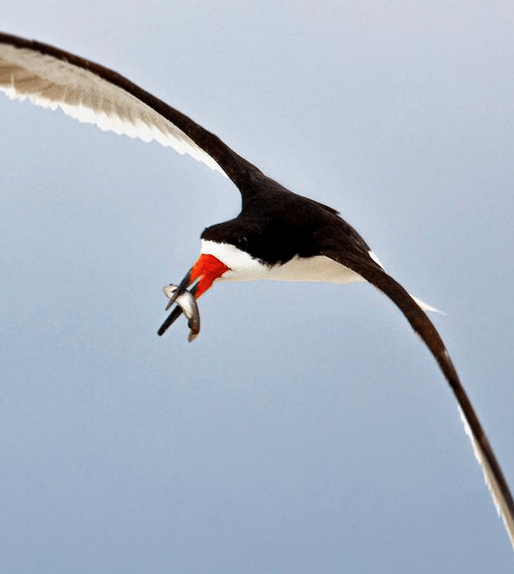
Last month, I had the opportunity to visit a nesting colony of Black Skimmers on Wrightsville Beach NC.
It was so cool to be able to spend time with these interesting birds as they went about their business of raising their families on the beach.
I really like the look of the Skimmers.
With that bold black and white plumage, they are quite a handsome species indeed.


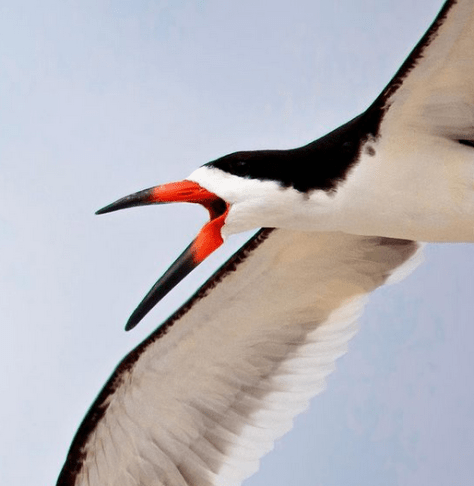
Nicknamed the ‘Toucan of the sea, the most striking feature of the Black Skimmer is it’s red-and-black bill.
As you can see here, they’ve got a lower mandible that juts out farther than does the upper.
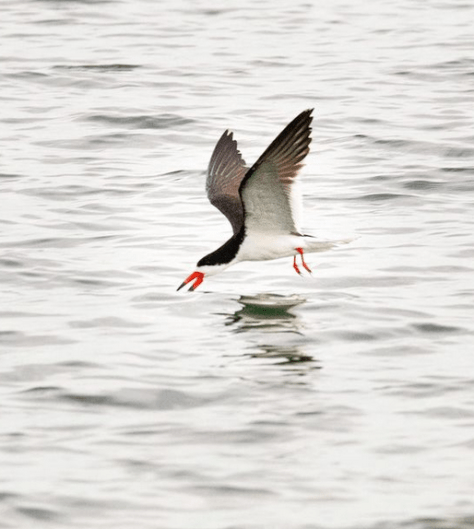
When feeding, the Skimmer flies low over water with its beak open and lower mandible partially submerged.
When the lower part of the bill touches prey, such as a small fish, the bill’s upper mandible snaps down like a mousetrap, securing the bird’s meal.


Although you can find them soaring above the shorelines of most of our coastal beaches, Black Skimmers are most often spotted inland feeding in our inlets, estuaries and other slow moving bodies of water near the Atlantic.
Happily, Black Skimmers are a year round resident of North Carolina but they do appear to migrate locally to the southern coast of the Tarheel state during the cooler winter months.

Photos by @sally_siko of @birdwatching_nc on the full frame beast of an SLR, the mighty @canonusa
#5Ds