Tag Archives: birding

Yellow-throated Warbler autumn migration at Jordan Lake SRA

Here’s another bird I’ve been seeing in higher numbers this year, the Yellow-throated Warbler.
These little gems seem to pop up everywhere I’ve gone birding in North Carolina since May and I couldn’t be happier about it 🙂


I spotted the bird in the first photo a few days ago at Ebenezer Point in Pittsboro NC and the second bird this past May at Yates Mill Park in Raleigh NC.

Perhaps the reason why “warbler neck” is a thing, Yellow-throated Warblers are best spotted in the mid to high canopy of the trees searching for insects and spiders as they pry into crevices along branches.
Unlike other warblers that move quickly and sporadically while hunting for food, Yellow-throated’s are slower moving and deliberate when hunting as they scour the branches, leaves, and ground for a snack.
This makes them a bit easier to observe and photograph which is always nice lol!

Arriving in late March Yellow-throated Warblers may be found throughout most of the state however they are somewhat more common in our eastern counties.
Look for Yellow-throated’s in varied habitats like dry pine stands and also in the tall trees growing along shorelines of ponds, lakes and streams. They are also fond of swampy areas too which makes for a pretty diverse range of opportunities in which to find them.
Unfortunately they will be leaving NC soon to head south for the winter so try and get out and see them this week or you’ll have to wait until spring to enjoy these delightful little birds again.

Photos by @sally_siko of @birdwatching_nc on my twin mighty megapixel dragons the @canonusa#R5 & the #5Ds
Hooded Warblers at Brumley North Nature Preserve, Durham NC

Here’s a bird I was pleased to find a few weeks ago, a Hooded Warbler!
I spotted this handsome little guy while birding at the Brumley North Nature Preserve in Durham, NC.
Normally Hooded’s stick to the dark, dense undergrowth areas in a forest so it was neat to actually get a glimpse of one perched on a branch (relatively) out in the open.
Although I wish that the lighting had been better in this series of portraits, I’ll take what I can get with this shy species.


Hooded warblers are unusually territorial.
In fact the males and females have their own territories marked and do not cross them unless for breeding.
Males and females even make use of different habitats during the winter. The males spend the cooler months in mature forests while the females frequent shrubby and swamp areas.
It is said that “distance makes the heart grow fonder”, at least so it goes with Hooded Warblers when breeding season arrives haha!


These feisty little birds will stick around NC for just a couple weeks more before heading south to warmer locals in the Caribbean, Mexico, and Central America for the winter.
When they return next April, you can find them across most of the state except for on our barrier islands.

Photos by @sally_siko of @birdwatching_nc on the mighty @canonusa
#5ds

Pine Warblers at jordan Lake SRA

With so many species of seldom seen migratory warblers flying in for a quick visit to the Tarheel state, year round residents such as the Pine Warbler are often overlooked when autumn arrives.


That’s a shame because these tiny yellow fluff balls are quite charming in their own right.
Happily they aren’t as shy as most other warblers and are even frequent visitors to our yards throughout the year, especially if you have provided a suet feeder for them to snack on.

I spotted this one at Ebaneezer Point on Jordan lake yesterday morning.
It was neat to watch him moving through the branches to locate a suitable breakfast. In this case, an insects egg sack hit the spot.


As their name suggests, Pine Warblers are best found in stands of pine trees hunting for a six or eight legged meal. Their diet mainly consists of insects yet when winter arrives they change their diets to include pine nuts, seeds, fruits and berries. This unique digestive adaptation allows them to get the nutrients they need even when insects are scarce.

Photos by @sally_siko of @birdwatching_nc on the mighty @canonusa
#5ds

Blackburnian Warblers at Bynum Bridge in Pittsboro NC

Autumn migration is an exciting time. It brings the opportunity to be surprised and delighted with unexpected finds when we step outside to go birding.
Case in point, this lovely Blackburnian Warbler. I encountered the one featured in the first 3 photos recently at the Old Bynum Bridge in Pittsboro NC while it was hunting for a meal in the trees.


As you can see, the Blackburnian Warbler goes through some pretty big changes appearance-wise during the fall. Their familiar bright orange, white and black breeding plumage (as seen in the last photo in this post which was taken in June) are replaced with a muted palette of warm grey, soft grey and charcoal tones.
Though the Blackburnian isn’t as showy this time of year, I think they are still a lovely sight.


Nesting exclusively in boreal forests, Blackburnian Warblers are a summertime resident in the higher elevation areas of western North Carolina. Elsewhere across the state they occur as migratory visitors just passing through.
The best way to see them is to head out to the Appalachians during late April and early May when the breeding season gets underway. At this time, the trees haven’t fully leafed out yet so they’re somewhat easier to find when singing at the treetops.

Back here in the Triangle, we’ve just got a few weeks left to spot these beauties before they head south to the mountain forests of the Andes mountains in South America.

Photos by @sally_siko of @birdwatching_nc on the mighty @canonusa
#5ds

A Yellow Warbler encounter at Jordan Lake SRA

Here’s a bit of feathered sunshine to brighten your day, a Yellow Warbler!


I was pleasantly surprised to find a pair of them yesterday afternoon while birding at Jordan Lake in central NC.
It was neat to be able to catch a good look at these beauties hunting for insects in a stand of trees along the shoreline.

Yellow Warblers are true omnivores and are able to adapt their diets to suit the bounty of a given season.
During the spring and summer, their diet is based on insects such as leafhoppers, beetles, wasps, midges and caterpillars. They are often seen hovering over tree branches as they glean to catch the flash of light reflecting off of an insect’s wings.
When the weather cools, berries and fruits may also be consumed during the autumn winter months to supplement their normal diet when insects are scarce.


Unfortunately these gorgeous birds won’t be in North Carolina much longer in 2021 as they’ll soon migrate to locations in Central America and northern South America to spend the winter.
If you missed them this year, no worries they will be back again here in the Tarheel State sometime around mid April 2022.

Photos by @sally_siko of @birdwatching_nc on the mighty @canonusa
#5ds

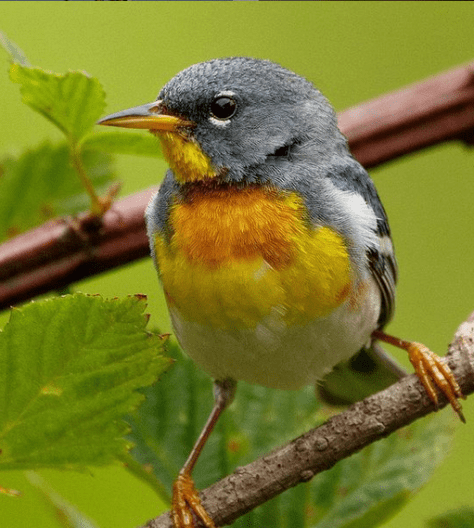
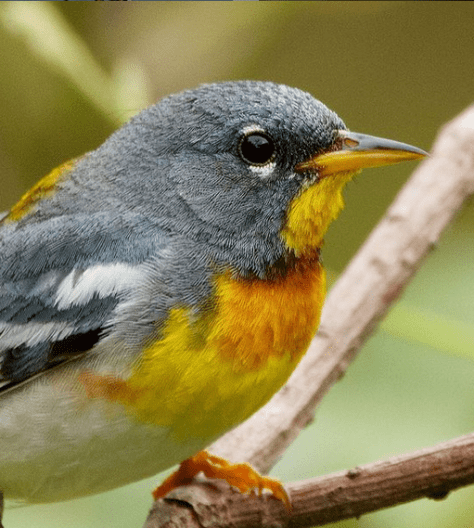
Northern Parula at Yates Mill Park, Raleigh NC

One of our most colorful part time avian residents of NC is the Northern Parula.


These little birds are absolutely beautiful if you’re lucky enough to get a close up look at one. It isn’t easy though as Parulas tend to forage in the treetops during the summer months. That being said, once autumn arrives their behavior changes as they begin to hunt for their meals a little lower towards the ground.
I spotted this one at Yates Mill Park and was pleased that he stopped moving around long enough for me to grab a couple pics.


Measuring just 11.4 cm, Northern Parulas are one of North America’s smallest species of Warbler and due to their energetic habits they can be tough to see or photograph. Happily though, they do respond well to pishing and will sometimes swoop in close to you to get a better look at who’s making all that swoooshing noise.

Parulas breed across the eastern United States and north up into eastern Canada. They favor habitats in swamps and wooded wetlands where Spanish Moss is present as this is their preferred nesting material.
Though they can be tough to actually see in the dense leafy canopy’s of the treetops you can certainly find them by listening for their distinctive buzzy trill call from above.
The Northern Parulas will only stick around NC through early October so you’ve still got a little time to enjoy them before they head south for the winter.

Photos by @sally_siko of @birdwatching_nc on the mighty @canonusa
#5ds

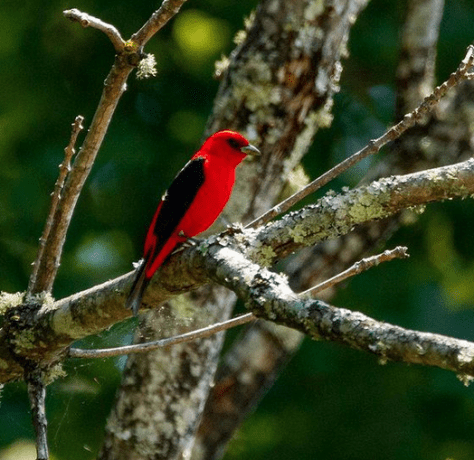
Scarlet Tanagers in North Carolina

Here’s a bird that I’ve struggled to get a good photograph of, the Scarlet Tanager.


The first few photos show a handsome male that I found along the Blue Ridge Parkway back in June.
While he did sit patiently as I took photos, unfortunately the closest view I had was from about 100ft away. Thank goodness for a zoom lens lol!

Finally though, this past weekend I got a great close up look at a female at the Old Bynum Bridge in Pittsboro NC.

Although she’s not as brightly hued as her crimson & onyx mate, female Scarlet Tanagers are quite lovely dressed in their autumn gold & charcoal plumage.

Scarlet Tanagers are a summertime resident of central and western NC. They are found in deciduous forests containing mature hardwoods.
Unlike their relative the Summer Tanager, Scarlets are secretive creatures preferring to nest and hunt for a meal in areas away from people.
If you’d like to try and attract these beauties to come out of the woods to visit your yard try planting raspberry, huckleberry, serviceberry, mulberry, strawberry, and chokeberry on your property.
These gorgeous birds will stick around for just a couple more weeks before migrating south for the winter.
Do keep in mind that Scarlets are also fond of eating jelly, cherries, oranges, suet and mealworms so offering these items in your feeders may be enough to entice them to visit you when they return to the area next April.
Aren’t they lovely?

Photos by @sally_siko of @birdwatching_nc on
the mighty @canonusa
#5ds

Breakfast with a Snowy Egret in the Carolinas

Semipalmated Plovers in the Carolinas

Behold the cutest little bird in the Carolinas, the Semipalmated Plover!


But what does “Semipalmated” even mean?
Well, it refers to the fact that they’ve got partially webbed feet.
I know it’s tough to see their toes in these photos but this webbing allows the birds to move about quickly in the shallow channels and puddles of water on the mudflats.

These tiny feathered dynamos are most often spotted in tidal marshes and beaches hunting for a meal in the mud and sand. Small birds with big appetites, they’re voracious eaters of insects and worms but will also gulp down small crustaceans and mollusks.


Though Semipalmated Plovers breed in the Arctic tundra, they are a semi-common sight in coastal areas of North Carolina during the spring and autumn.
A few even spend the winter here in our southeastern coastal counties so it’s well worth keeping an eye out for them in the months to come.

Photos by @sally_siko of @birdwatching_nc on the mighty mirrorless monster of a camera, the @canonusa
#R5

Clapper Rails at the Huntington Beach State Park

When looking for birds, timing is everything. Usually we think about things like migration or morning as being the best time to spot a new bird but hourly changes to a habitat are something to consider too.
Case in point- when the tide goes out, the birds roll in to the marsh at the Huntington Beach State Park in Murrells Inlet SC.


When the marsh is filled with water, the Clapper Rails stay hidden in the tall grass but once the water drains, these shy birds will wander out into the open mudflats to feed.
I found this one yesterday at Huntington Beach and was so happy to get a nice close up look.

Clappers are a year round resident of North Carolina and although they are very commonly found in the saltwater marshes along our coastline yet due to their secretive nature, they can be tough to actually see.
That being said, Clappers are not necessarily hard to locate because they are one of a few species of Rail which are vocal when the sun is up. These brown waders can be heard giving their laughing, cackle calls throughout the day. This means that you can verify that they’re in the area when seeing one in the tall marsh grass isn’t an option.

Photos & video by @sally_siko of @birdwatching_nc on the mighty mirrorless monster of a camera, the @canonusa
#R5