Tag Archives: best life birding trips

Ring necked Pheasants in North Carolina

By: Sally Siko

North Carolina is home to hundreds of species of amazing birds but few match the stunning beauty of the Ring necked Pheasant.
These rare gems are truly a spectacular sight to behold, especially when engaged in a courtship display as seen in this series of photos that I captured at Sylvan Heights in Scotland Neck, NC.
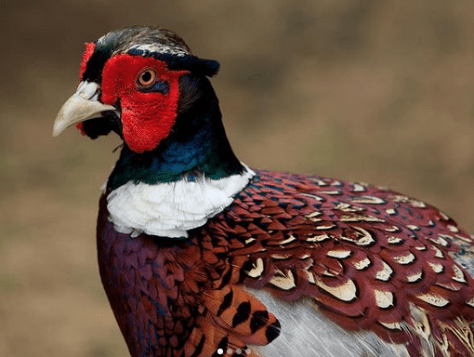


Ring necked Pheasants were introduced into NC from Asia around 100 years ago.
Though they were once a (relatively) common sight in the fields of our coastal areas, today that is not the case.
Unfortunately due to predation and habit loss, they are a scarce find with only very small population of these birds residing on a small strip of land of the Core Banks and Portsmouth Island within the Cape Lookout National Seashore.
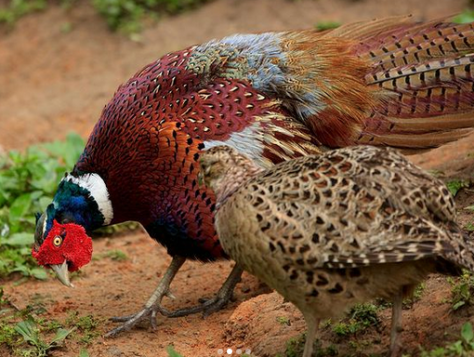
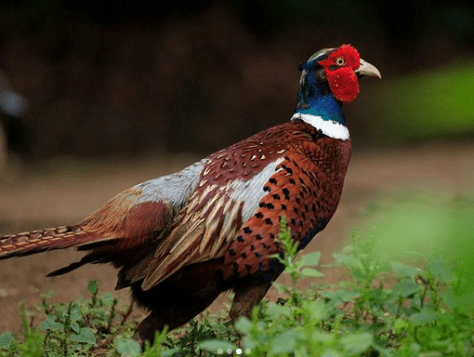
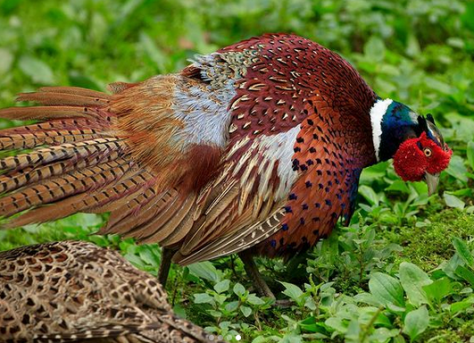
If you’re up to undergo a search for the Ring necked Pheasant, look for them feeding in open grasslands containing scrubby thicket areas.

Photos by @sally_siko of @bestlife_birding on my beloved full frame 50MP beast, the mighty @canonusa #5ds
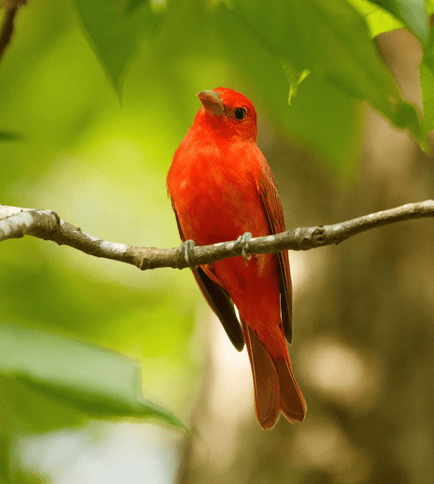
Summer Tanagers in North Carolina

By: Sally Siko

Each spring, the woods begin to fill up with the sounds of bird songs. It’s a symphony of whistles, chirps and chortles but with one call in particular that sounds out above all others.
That is the familiar cluck-chirp of the Summer Tanager!
The sound of these gorgeous birds calling to one another in the forest is an unmistakable signal to mark the changing season.


Did you know that the Summer Tanager is the only entirely red colored bird found in the United States? Northern Cardinals and Scarlet Tanagers come close however both of those species also have black feathers on their bodies.
All three species get their bold red hues from carotenoid compounds which produce the red (and sometimes yellow) colors seen in the birds feathers. These are acquired through their diets (mainly through fruit), and are then processed in the body into pigments that are deposited in the growing feathers.

Summer Tanagers are generally spring and summertime residents of North Carolina.
They arrive in April and hang out until September before migrating south to Mexico, Central and South America. That being said, there are small but growing numbers of Summer Tanagers that stick around for the entire winter in the eastern part of the state provided that they have a reliable food source available to them via a feeder.
Pretty cool huh?

Photos by @sally_siko of @bestlife_birding on my beloved full frame 50MP beast, the mighty @canonusa #5Ds

Red cockaded Woodpeckers in the Sandhills of NC

By Sally Siko

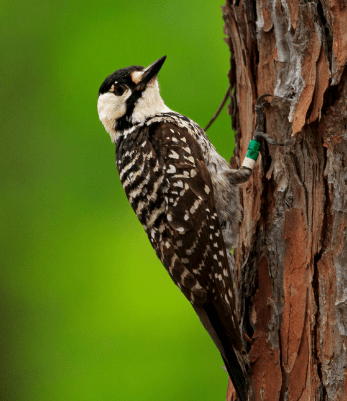
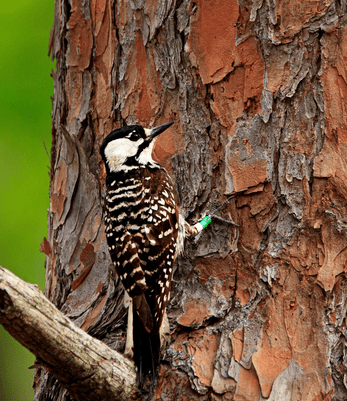
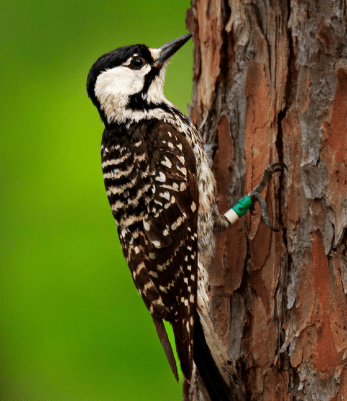
It’s always a joy to catch a glimpse of a rare bird when out in the field and one of my favorites are the Red cockaded Woodpecker.
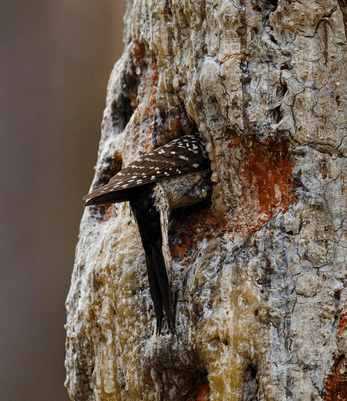
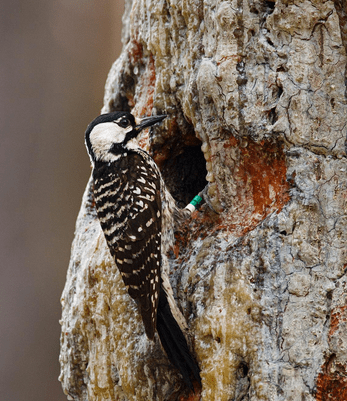
I spotted this little one bringing food back to its nest while leading a tour last week in the Sandhills region of North Carolina.
Though it didn’t stick around for very long, it was a delight to be able to share the experience of seeing this feathered gem with my guests!


These sweet little birds were once a common sight in the southeastern regions of the United States. Due to loss of habitat, today they are considered an endangered species.The reason why is because Red-cockaded Woodpeckers require a narrow scope of forest conditions to breed. They prefer to nest in mature stands of long leaf pine trees with little or no understory. Unfortunately these old growth forests have faced rapid decline which in turn has led to the decline of this species as well.


Luckily, the Sandhills region of North Carolina is a special place where several stands of old pine trees are preserved and maintained lending to provide the perfect conditions for the Red-cockaded to nest.
Here you can see them raising their families every spring and throughout the summer months. It’s truly a special place to enjoy these wonderful birds.
I can’t wait to come back for another look!

Photos by @sally_siko of @bestlife_birding on my beloved full frame 50MP beast, the mighty @canonusa #5Ds

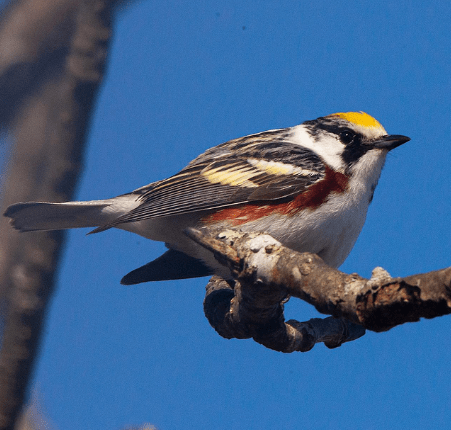
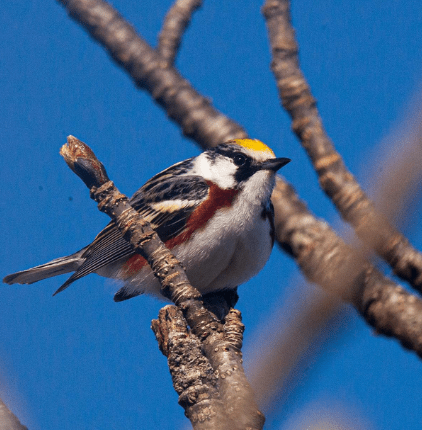
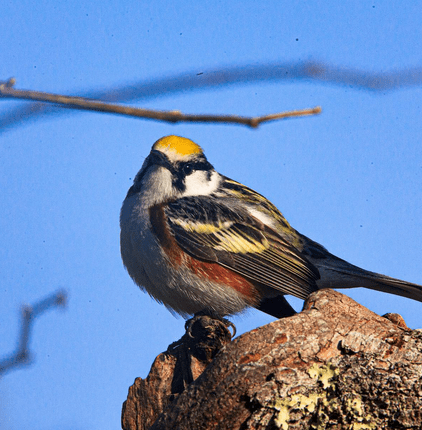
A Chestnut sided Warbler encounter in the Blue Ridge Mountains of NC

By Sally Siko

When birding in the blue ridge mountains of western North Carolina, one of my favorite species to find are the Chestnut sided Warblers.
These energetic little birds are fast movers which prove to be a challenge to photograph even in the best of lighting conditions.
I found this one singing above my head a few weeks ago. Although I’d have preferred to catch a shot or two of him at eye level it was not to be so I’ll settle for these.


In my experience, Chestnuts are affable birds which will allow you to get quite close to them and may even follow you down a trail for a few yards.
The easiest way to locate one is by listening for it’s accented-ending song which is best described as “pleased-pleased-pleased-pleased-ta-MEETCHA.”
Only male Chestnut-sided Warblers sing, although females may occasionally make song-like vocalizations. Nearly all singing is done within the male’s territory, usually from elevated perches in trees.
Fluttering from limb to branch, (often with their tails partly cocked and wings slightly drooped) males sing and forage intermittently, hopping from branch to branch.


Chestnut sided Warblers are found from April through early October in western North Carolina and during migrational periods throughout the rest of the state.
Look (and listen!) for them along the wooded edges of fields, regenerating clearcuts, forest openings, mainly in deciduous saplings and trees.

Photos by @sally_siko of @bestlife_birding

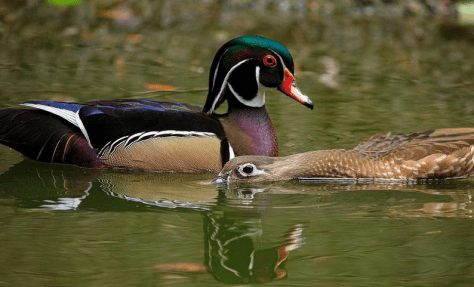
Wood Duck breeding season in North Carolina

By Sally Siko

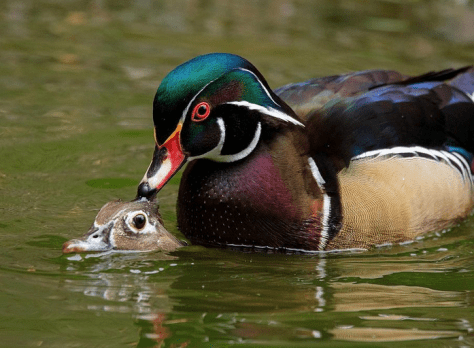
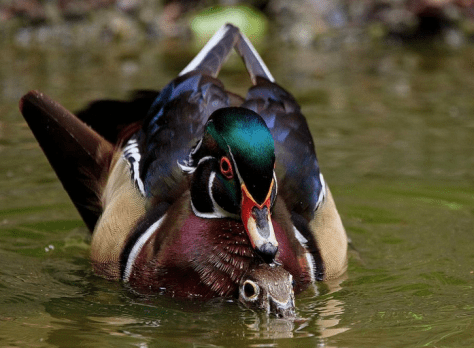
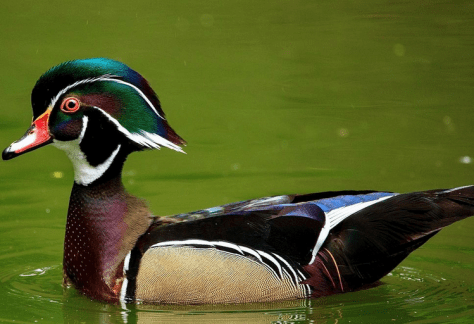
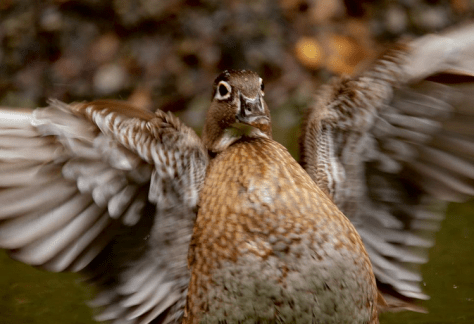
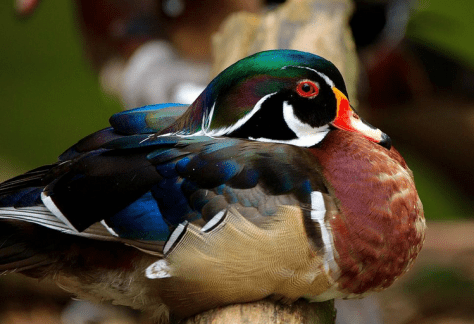
As is the case with this pair of Wood Ducks, there’s a lot of action going on in the Carolinas.
Although many Wood Ducks have already hatched one clutch this spring, soon they’ll be raising a second as the year continues.
In fact, they are the only species of duck in North America to lay eggs twice in a breeding season.


Wood Ducks are cavity nesters often using the empty holes chipped away by woodpeckers in dead trees and in nest boxes placed near bodies of water.
After lining the cavity with soft grass and feathers, the hen will lay a clutch of 10-15 eggs. Brooding time averages about 30 days.
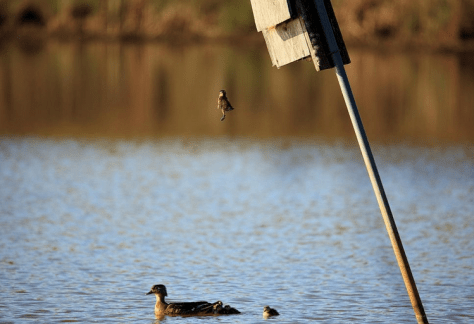
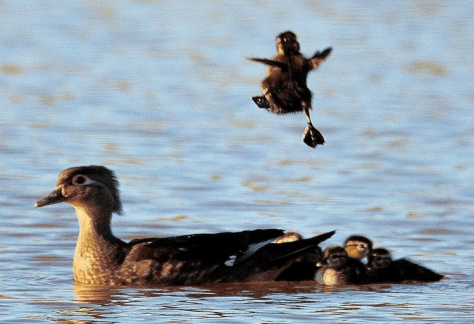
As seen in the last few photos in this post, the ducklings will leave the safety of their nest soon after hatching.
It’s a remarkable thing to watch these tiny ducks take that first giant leap down into the watery world below!
The young ducks will then spend a few months with their mother learning how to feed themselves.


Though the species occurs throughout the entire year here in NC, they are more numerously found during the spring and summer months.
Look for these gorgeous birds in wooded or semi-wooded fresh water ponds, lakes, and larger streams.
Their wintering habitat is similar: wooded or semi-wooded ponds, impoundments, swamps, and larger streams.
Aren’t they lovely?


Photos by @sally_siko of @bestlife_birding on my beloved full frame 50MP beast, the mighty @canonusa #5Ds

A Wilsons Warbler at Brumley Nature Preserve, NC

By Sally Siko

It’s the last week of May and spring migration is winding down here in central NC.
Luckily, (with the help of @latta.ridge ) I was able to get a good look at a lone male Wilson’s Warbler last week at Brumley Nature Preserve.
These handsome birds breed across the entirety of Canada and into Alaska which is why I was excited to catch a glimpse of a Wilson’s on his hurried journey north.


A somewhat rare sighting in the Tarheel state, Wilson’s Warblers are spotted here only during migrational periods.
They are tiny birds measuring 4.7” in length which makes them kinda tough to spot in the brush.
To make matters more difficult, Wilson’s prefer to hide out in dense willow thickets and dark forests with a water source nearby.
Their yellow plumage seems to absorb the green light of the sunshine filtering down through the leaves which provides an effective camouflage while they flit about on the branches. This makes them a challenging bird to find and photograph!
Though I spent about 15 minutes observing this one, I only managed to capture this single photo from the encounter as the tiny bird emerged from the woods to a field’s edge.

Wilson’s Warblers are found in central and eastern (rarely in the mountains) portions of North Carolina in mid to late May and again from late September through early October.
There still may be a few hanging around out there right now so be on the lookout this week!
Otherwise you’ll have to wait for autumn for another chance at seeing these beautiful feathered gems.

Photos by @sally_siko of @bestlife_birding on my beloved full frame 50MP beast, the mighty @canonusa #5Ds

Canada Warblers in the Blue Ridge Mountains of North Carolina

By Sally Siko

One of my favorite species of birds to find in the Blue Ridge Mountains is the Canada Warbler. With that slate grey, black and bright yellow plumage pattern standing out in the tangled brush, it’s hard to ignore these tiny feathered dynamos as they flit from limb to branch.
Though they’re small (measuring about 14cm in length) Canada’s are relatively easy to find at higher elevations by listening to their loud calls which starts with a starts a chip, followed by a series of warbling notes that often ends on a higher pitch.


These handsome Warblers nest across the southern boreal region of Canada, from extreme southeastern Yukon to Nova Scotia, and south to the Great Lakes region, New England, and into the Appalachian mountains all the way down to Georgia. It’s neat to have a species like this calling the Tarheel state home during the summer.


When looking for Canada Warblers, investigate areas which provide their favored habitats of dark brushy cover in the understory layer of mixed deciduous forests along the higher elevations of the Parkway.
They are best found foraging in dense, dimly lit patches of rhododendron and mountain laurel.

Though they can be hard to spot at times, luckily Canada Warblers relatively common in the Blue Ridge so you should have multiple opportunities to see and photograph them if you take the time to search for these feathered gems.

Photos by @sally_siko of @bestlife_birding on my beloved full frame 50MP beast, the mighty @canonusa #5Ds

A Kentucky Warbler at Bynum Bridge, Pittsboro NC

By Sally Siko

With as many KY birds as I’ve been posting recently, how about this Kentucky Warbler that I found while birding here in NC with my freind Corie Latta @latta.ridge earlier this month?
Isn’t he gorgeous?!
We spotted this feathered gem while exploring the area around Bynum Bridge in Pittsboro.
The neat thing was that this particular bird was super accessible as it popped out of the underbrush frequently to sing offering us multiple opportunities to snag a good photo or two.
Big props to Corie for putting us on this bird!


This brightly colored warbler, (unlike so many other geographically named warblers lol), is actually well-named, as the center of its range lies squarely in the center of the state of Kentucky.
They are quintessential birds of the Eastern deciduous forest, breeding across nearly all of North Carolina from the mountains to the coast. Though they are considered a common bird west of the Appalachians, east of the Blue Ridge mountains there isn’t a particular region where Kentucky Warblers are found in great numbers so it’s always a treat to spot one here in the Triangle area.


Kentucky Warblers are usually best found in moist, rich forests, containing a thick underbrush zone near creeks and streams beneath a hardwood canopy.
Most breed in our floodplain habitats (particularly in brownwater ones) while avoiding blackwater regions such as the Lumber River area.
In our western mountains, where broad floodplains are scarce, Kentucky Warblers may be found nesting on slopes, but usually on lower ones or on others that are very rich and lush.
Look for these beauties from late April through early September here in the Tarheel state.

Photos by @sally_siko of @bestlife_birding on my beloved full frame 50MP beast, the mighty @canonusa #5Ds

A bilateral gynandromorph Northern Cardinal at Bynum Bridge, Pittsboro NC

By Sally Siko

One of the best things about birding is that there’s always a potential to be surprised by something unexpected out in the field.
Case in point, a possible bilateral gynandromorph variation of a Northern Cardinal which I photographed last week at Bynum Bridge in Pittsboro NC.


If you look closely at the photos you can see that it’s colors are split right down the middle with bright red, male plumage on one side and buff-brown, female plumage on the other.


So, how does a Northern Cardinal end up being dual-plumaged?
It involves a cocktail of chromosomes, which work slightly differently than the X and Y sex chromosomes that mammals carry.
Female birds carry both sex chromosomes — which in birds are labeled W and Z — while males carry two Zs.
Gynandromorphy is thought to occur when female egg cells develop with two nuclei — so that one nucleus contains a single Z chromosome and the other contains a single W.
When that egg is fertilized by sperm carrying two male Z chromosomes, the egg develops with both ZZ (male) and ZW (female) chromosomes.
The bird then develops with half of its body containing male ZZ cells while the other half contains female ZW cells.
If this chromosomal mix-up occurs early on in the animal’s development, before many of their cells begin to divide, it can result in the sort of perfect bilateral split which may be the case seen in this bird.


In addition another thing that fascinated me was that I managed to capture a photo of the Cardinal with it’s male mate during a food exchange. Then the bird flew down into a shrub and settled onto a nest!
As it turns out, gynandromorphic birds will sometimes have at least one functioning ovary which means that they can lay eggs and reproduce.
Pretty neat huh?

Photos by @sally_siko of @bestlife_birding on my beloved full frame 50MP beast, the mighty @canonusa #5Ds

A Cerulean Warbler in Lexington, KY

By Sally Siko

As a birder & photographer, I’m always excited to see & photograph a new species whenever I get lucky enough to add a lifer to my list.
Weirdly enough, it seems that every time this happens my photos aren’t very good lol!


I don’t know if it’s the excitement of seeing something for the first time that throws me off my photo game or just bad luck with lighting and angle but this happens to me a lot.
Case in point, my first photos of a Cerulean Warbler that I found while on a birding trip in eastern KY.
While I was very, very happy to finally lay eyes on this gorgeous bird, it stayed high up in the canopy of the trees, backlit under bright sunshine or perching in the shadows of the leaves. Not great conditions for getting quality portraits but certainly good enough for an ID and the making of wonderful memories 🙂


The aptly named Cerulean Warbler is indeed a handsome bird with adult males sporting that light (cerulean) blue, white and black plumage.
Females are equally as lovely adorned with a greenish blue upper body plumage with a yellowish green underside.
From a distance or in poor lighting conditions I’ve found it’s possible to mistake a male Cerulean with a Black and White Warbler until the bird comes out into the sunlight.

With populations of this species in decline (due to habitat loss) it can be somewhat challenging to find these shy warblers.
Your best best to spot one is to search the mid to high canopies of the trees during the summer breeding season on the east coast. Ceruleans prefer to hang out in mature deciduous forests throughout the eastern United States, but are particularly abundant in oak-dominated forests that contain canopy gaps and a complex canopy structure.
Look for them in Kentucky from late April through early August.

Photos by @sally_siko of @bestlife_birding on my beloved full frame 50MP beast, the mighty @canonusa #5Ds