Tag Archives: birdwatching nc

A Swamp Sparrow encounter at Mid Pines Rd in Raleigh

Now that cold weather is right around the corner, it’s time to be on the lookout for our wintertime birds like this Swamp Sparrow.
These lovely little ones arrive in North Carolina in early October and although they mostly hang out in our eastern counties their found in varying numbers throughout the state.
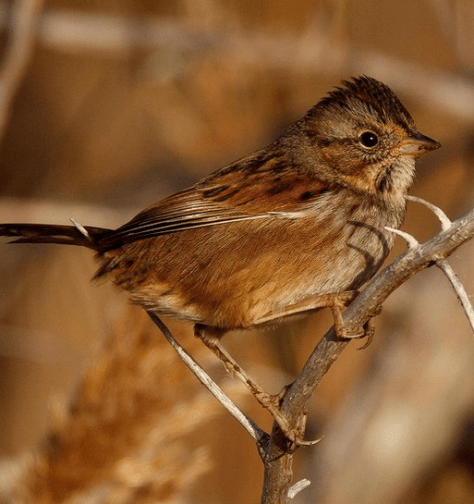


Though their name would suggest otherwise, Swamp Sparrows inhabit many types of different habitats including marshes, wetland thickets, bogs and damp fields. The main thing is that they tend to avoid dry forests so look for them in open areas near a water source with tall grass and dense scrub.
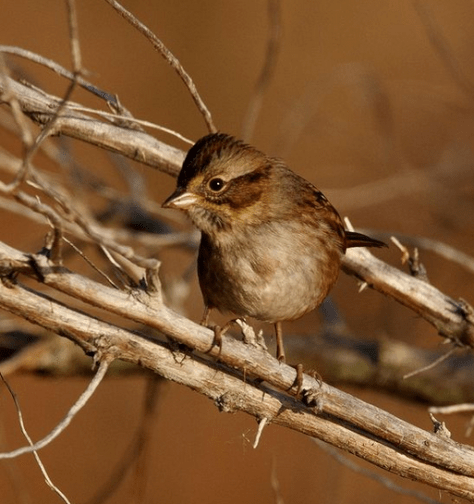
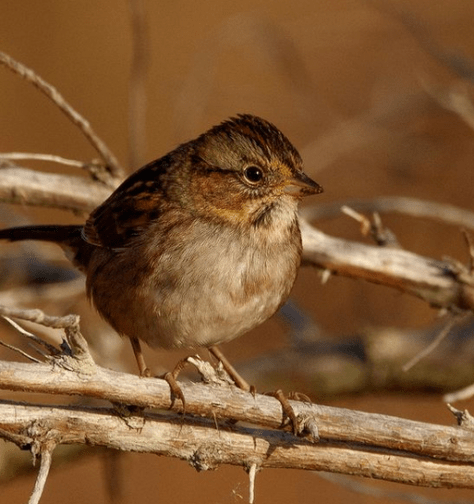
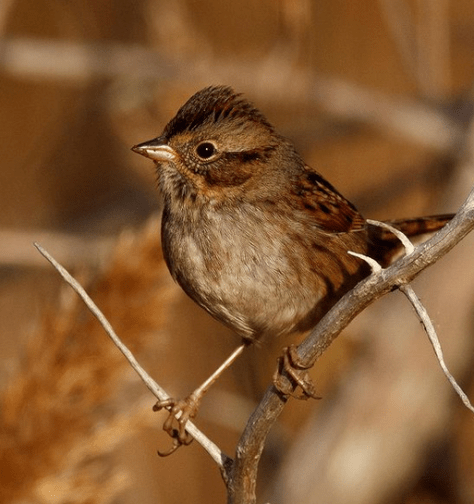
As it goes with most species of sparrows, these guys eat a ton of insects during the spring and summer. Unlike others though Swamp Sparrows have extra long legs which they use to wade into shallow water to hunt for aquatic insects.
Once autumn arrives and insects become scarce, they’ll switch to eating weed and grass seeds which makes them a little easier to find in accessible field areas vs. their wetland summer habitats.
In fact, during the winter Swamp Sparrows will congregate with flocks of Song Sparrows to venture to the edges of agricultural fields and suburban parks to find a snack.
They’ll stick around until early May so we’ve still got plenty of time to enjoy these feathered gems in the season ahead.

Photos by @sally_siko of @birdwatching_nc on my 50 megapixel monster, the mighty @canonusa #5Ds
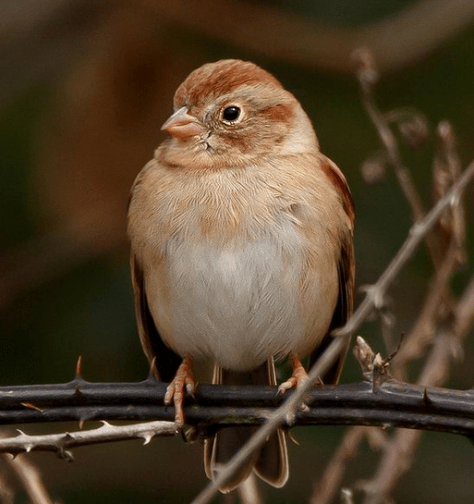
Field Sparrows at Mid Pines Rd

It’s always a delight to catch a couple photos of a Field Sparrow. I caught a glimpse of this little gem on Friday afternoon at Mid Pines Rd in Raleigh.
This species has that prominent white eye ring making them easily identifiable which is a very good thing when trying to figure what kind of sparrow you’re looking at.
Plus the white feathers around their eyes give them a sweet faced look that never fails to make me smile whenever I encounter one.


Field Sparrows are a year round resident of North Carolina, yet here in the central part of the state they appear to be found more numerously during the autumn and winter months.
Although they are known nest across the state, the numbers of Field Sparrows sighted in the breeding seasons have been in steady decline over the past 20 years. The exact reasons for the dip in are still unclear but the downward trend seems to follow a similar path to the decline in Bobwhite numbers which I would suppose has to do with the loss of rural & agricultural habitat that both species rely on.


As you’d expect, Field Sparrows are found in tall grassy open areas, overgrown fields, hedge line brush and maritime thickets. The roadside fence line along Mid Pines Rd. adjacent to the cow pastures is the perfect place to spot these guys.
Grass seeds make up less than 50% of their diet in the summer, but more than 90% in the winter. In the summer they also take adult and larval insects and spiders.
Field Sparrows forage on the ground, but look for flocks of them in the grass near some form of plant cover where they can quickly fly into if they need to hide.

Photos by @sally_siko of @birdwatching_nc on my magnificent megapixel monster, the mighty @canonusa #5Ds
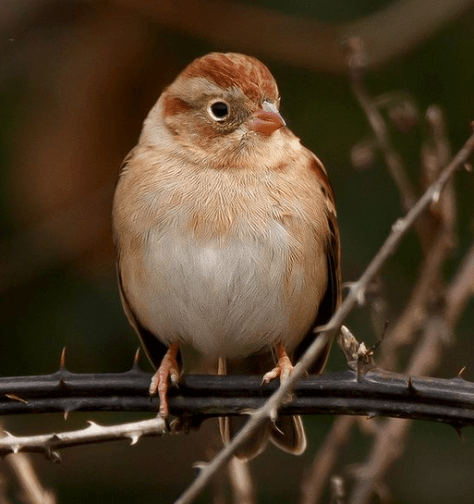
Bald Eagles and Ospreys at Huntington Beach State Park

It’s always a treat to spend time with the Carolinas two largest raptor species, the Bald Eagle and an Osprey.
I spotted these impressive creatures while birding at Huntington Beach State Park in Murrells Inlet SC last week.
Both birds favored perching on the top of the same dead tree along Jetty Drive offering me good views throughout the day.


Though these two shared the same roosting site, as seen in the last few photos of this post Bald Eagles and Ospreys are often seen competing with each other for food.
In fact, I even got to watch a Bald Eagle harassing an Osprey to drop its fish into the ocean.
Once the fish hit the water, the Bald Eagle swooped down to retrieve the Ospreys prize.


Bald Eagles are year round residents of North and South Carolina. They are found across both states from the mountains to the coast and are best spotted near large lakes and rivers. Thanks to conservation efforts, Bald Eagle numbers have been on the rise over the past 20 years so although they aren’t necessarily a common species of bird, your chances of seeing them in the Carolinas are pretty good!


If you’re looking to find an Osprey in the winter, your best bet is to head to the coast of South Carolina as this is the northern boundary of their wintering range.


During the rest of the year, Ospreys are found in both states hunting on rivers, freshwater lakes and ponds as well as in our coastal counties over marshes and along the Atlantic coastline.

Photos by @sally_siko of @birdwatching_nc on the mighty mirrorless monster of a camera, the @canonusa
#R5

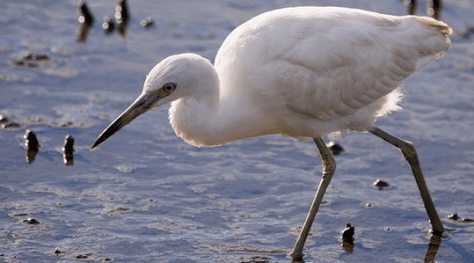
Little Blue Herons at Huntington Beach State Park

Check out these beautiful Little Blue Herons!
I spotted them last week while birding at the Huntington Beach State Park.
It was particularly nice to catch a good look at the adult bird because usually all I see out there are immature Little Blues.
Not that there’s anything wrong with enjoying time with the little ones lol, it’s just I’ve been wanting to get a photo of an adult all year and hadn’t had much of an opportunity to do so until then.


As seen in this photo below, the young birds are dressed in entirely white plumage (with a tiny tinge of grey showing on the tips of their primary’s) during their first year.


Immature Little Blue Herons are easily confused with other white colored wading shorebirds such as the Snowy Egret.
The best way to tell them apart is to check leg color (black/ Snowy Egret vs. greenish yellow Little Blue Heron).

If your unable to discern the color of the birds legs then body language & posture is a reliable way to tell the two species apart.
Snowy Egrets tend to be very active while foraging. They appear to walk erratically, raising their heads to stand fully upright often to scan the water surface, they are always on the move.
Little Blue Herons are methodical hunters. They walk deliberately with their heads pointed down towards the mud or water while moving at a slow pace, rarely standing upright for more than a second or two.


These elegant birds are permanent residents of North Carolina’s coastal counties. Although a small number of them spend the winter here, as a migratory species they occur more numerously in the spring and summer months.
Look for Little Blue Herons hunting at the edges of freshwater ponds, brackish marshes and on mudflats from March to October.

Photos by @sally_siko of @birdwatching_nc on the mighty mirrorless monster of a camera, the @canonusa
#R5

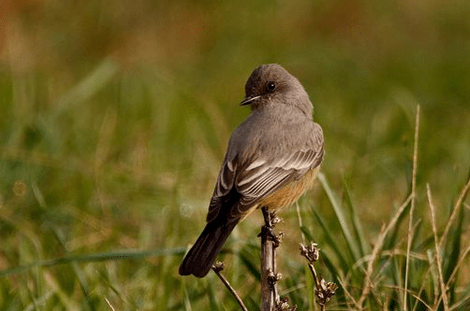
Rare Bird alert North Carolina- Say’s Phoebe in Gibsonville, N.C.

By: Sally Siko- Admin Birdwatching NC

After missing out last weekend, I finally got this morning to see the Say’s Phoebe that’s been hanging out at the Guilford County Farm in Gibsonville, NC.
Rarely seen on the east coast of the US, the Say’s Phoebe’s normal range extends from Alaska, throughout the western United States and down into Mexico.
The fact that this bird somehow ended up in central North Carolina is pretty cool!

This bird looks similar to the Eastern Phoebe except that it has a grey breast and a salmon colored belly. It even behaves in a similar way with tail flicking which I thought was pretty cute 🙂
Although I hadn’t seen one until today, I know that Phoebes prefer to hunt for insects at the edges of open grassy areas so when I set out to search for it I had a pretty good idea of where it would likely be.
It took about two hours of searching when the bird finally showed up in the corner of a field near one of the farm sheds.
Success!

Coincidentally, there was another large group of birders on the farm that day. While we didn’t interact with each other, I assumed they were searching for this bird too.
I quickly grabbed a few photos of the Say’s and then jogged up the fence line to see if there was anyone still hanging out from that group who’d like to see this bird.
Unfortunately, all of the birders had left the farm except for one guy (Hi Keith!) so he was the only one who got to view the Say’s with me.
Oh well, I tried. Lol, even when I’m not leading a tour I can’t stop myself from sharing my happy bird-nerd moments with others!

This particular bird has been hanging out at the farm for around 3 weeks so it’s likely that it’ll still be there for a few more days. It seems to prefer that field along northeastern corner of the bob wire fence line.

By the way, the Guilford County Farm park is public property and there is a public parking lot on-site so no worries about hiking around the grounds.
If you’d like to find it too I’ve included a Google map showing the exact spot where I found it below.

Happy birding!

-Sally

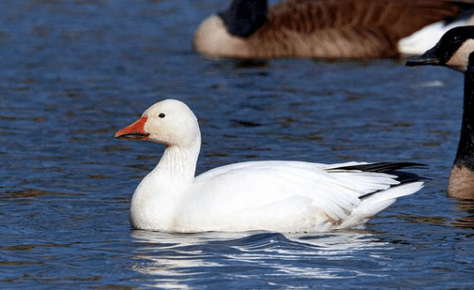
Rare bird alert North Carolina- Snow Goose in Raleigh

By: Sally Siko- Admin Birdwatching NC

Late autumn has the potential to bring surprise avian visitors to the Triangle region of central North Carolina.
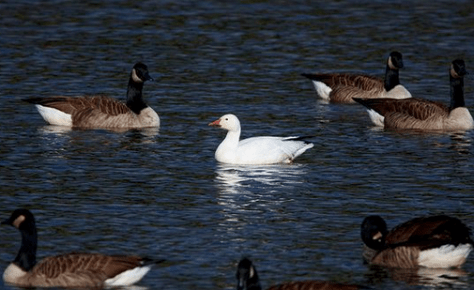
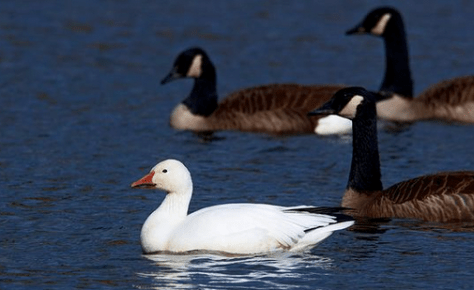
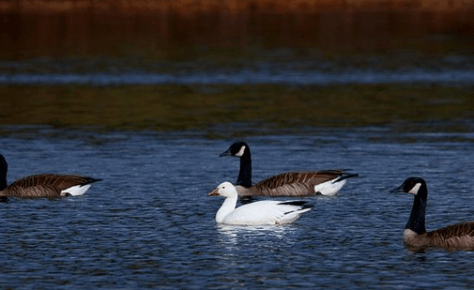
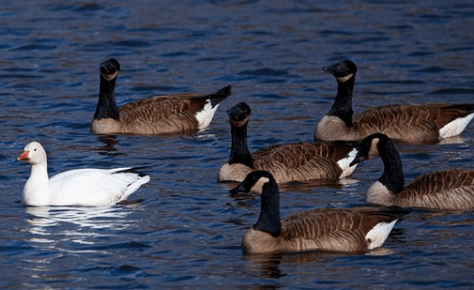
Case in point, this Snow Goose that I was lucky to find in Raleigh behind the Antioch Church off of Lake Wheeler Rd. yesterday morning!
Normally I have to travel to the coast to see these handsome white birds so it was neat to spot this bird so close to my home.


Snow Geese are wintertime residents to the eastern coastal counties of the Tarheel state. Each year, thousands of them descend onto the farm fields and tidewater marshes to feed and roost during the cooler months.
Dedicated herbivores, their diet consists of leaves, grass, seeds and spilt grain found in agricultural fields.
In fact, I’ve always had better luck finding Snow Geese on land than on the water which is why I enjoyed photographing this one floating on the pond!


The best places to find Snow Geese in North Carolina are at Lake Mattamuskeet, the Pocosin Lakes NWR, and on Pea Island in the OBX. They are easy to ID in the field since they’re smaller than the Tundra Swans and that beautiful white plumage certainly stands out among any mixed flock of other geese.
Look for them from mid October through early March.
I know I’m certainly excited about the possibility of seeing more of them in the season ahead 🙂


Photos by @sally_siko of @birdwatching_nc on my mighty 50 megapixel monster, the @canonusa #5Ds

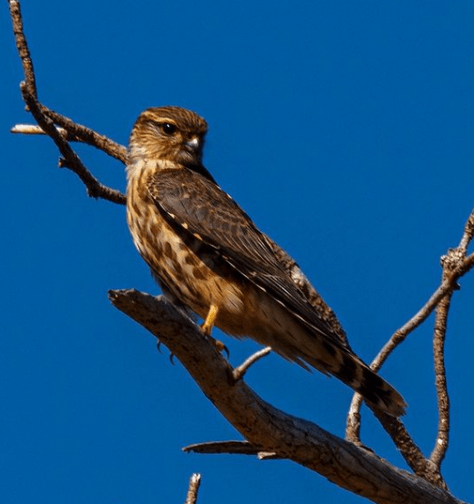
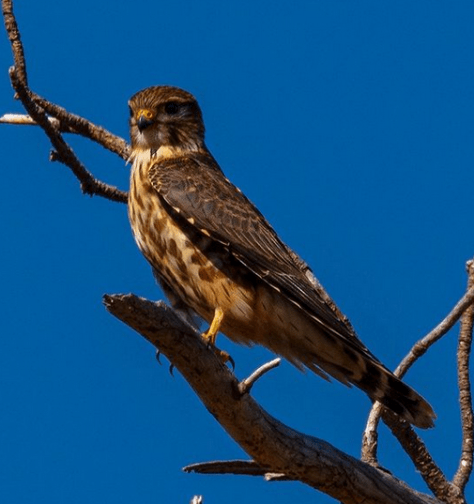
Spending time with a Merlin at Point Lookout State Park

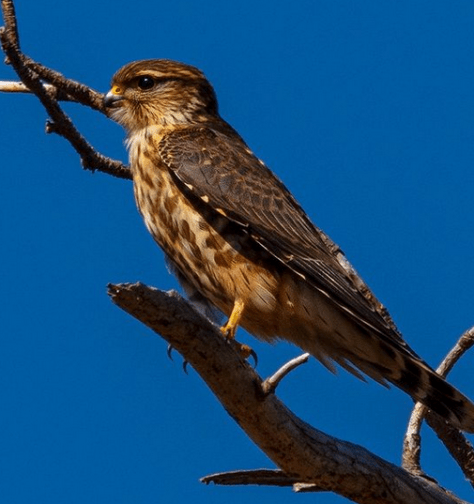
Check out this Merlin I found while hiking along the Railroad Trail at Point Lookout State Park last week!
While it’s always exciting to see a large raptor, I haven’t had many opportunities to spend time with these small members of the falcon family.


With pointed wings and faded helmet markings, Merlin’s sort of look like mini Peregrine Falcons when viewing them from a distance. I got lucky and was able to creep up slowly in the tall marsh reeds to photograph this one a relatively “close” distance.
Still, it took a 600mm lens zoomed all the way in to capture these photos as Merlin’s have extraordinarily good eyesight. They tend to be rather skittish so getting a proper look at one can be difficult to do before they fly off.


Although I photographed this one in Maryland, Merlin’s are migratory visitors to North Carolina and generally may be found in the state from September through early November and again from April to mid May.
They are especially prevalent in the OBX during this time of year in the Bodie Island and Pea Island NWR.
Like other falcons such as Kestrels and Peregrines, as seen in these photos they have a habit of perching on the tops of dead trees to survey the landscape below for prey.
Look for them at the edges of any open areas such as agricultural fields, meadows and even marshes hunting for a meal.

Photos by @sally_siko of @birdwatching_nc on my 50 megapixel monster, the mighty @canonusa #5Ds
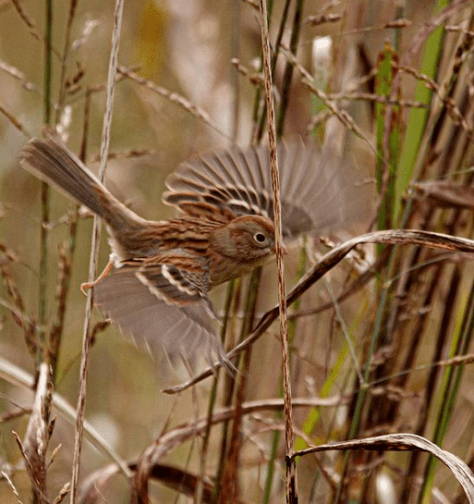
Birdwatching NC field trip- A Nelsons Sparrow sighting at Point Lookout State Park

I took a quick birding trip to Scotland Maryland this week at Point Lookout State Park and was pleasantly surprised to find this sweet Nelson’s Sparrow (and it’s mate?) hanging out with a flock of Swamp Sparrows.
They have the weirdest call ever!
Kind of sounds like a wire brush softly scraping on an aluminum can. I’m hoping to see them again this winter so that I can capture some video of them calling to share with you.


Nelson’s Sparrows are often seen along the mid Atlantic / southeastern & gulf coasts of the United States in the cooler months.
Strange thing was this bird came up as “rare” on eBird since the species is expected in the area during migration and in the winter. Not sure why this is the case but I’m always happy to check off an “R” designation bird on the list!

Arriving in late September, they spend the winter in North Carolina’s coastal counties inhabiting our salt marshes through late May.
They are distinctive looking little birds with grey cheeks, buff orange face, a faintly streaked buff orange breast, flanks and sides with a white abdomen.
That orange coloring definitely makes them stand out from the other sparrows which is nice when trying to ID individual birds in a mixed flock.

Photos by @sally_siko of @birdwatching_nc on my 50 megapixel monster, the mighty @canonusa #5Ds
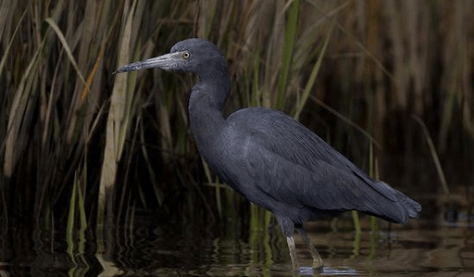
A Black-throated Green warbler encounter at Lake Betz, Morrisville NC

Here’s a nice little bird I spotted at Lake Betz in Morrisville NC this past weekend, a Black-throated Green Warbler!
I’d been hoping to catch a good look at one of these beauties this autumn but hadn’t had luck in doing so until this one showed up.
Happily he responded well to my pishing and even landed on a branch in good lighting which rewarded me a few decent shot opportunities before he flew off into the trees.

Depending on where you live in NC, these birds are either transient migratory visitors or are locally common summertime residents. This is because Black-throated Green Warblers have a split breeding range here in the Tarheel state.
Generally, they are found from late March through October in the mountains and in our coastal plain regions while they only tend to show up in the piedmont area from mid-April to mid-May, and again in early September through October.

While they favor stands of spruce, pine, fir, cedar, or cypress stands for nesting activities, once they start migrating south, the Black-throated Greens can be seen in just about any kind of habitats including deciduous forests and in scrub brush areas next to open fields or water.
That being said, they won’t stick around NC much longer as most of them have already headed out to spend the winter in warmer locals. Get out this weekend to see them before they move on!

Photos by @sally_siko of @birdwatching_nc on my mirrorless megapixel monster, the mighty @canonusa#R5

Black-throated Blue Warbler migration at Jordan lake

There are certain birds out there that I’ve seen several times over the years but haven’t got a proper good look at.
Sure, this is fine for my life list but as a photographer, it’s unsatisfying.
Case in point, this Black-throated Blue Warbler.


Though I was grateful to spot a lovely pair at Ebenezer Point at the Jordan Lake SRA this past weekend, unfortunately I was thwarted again of a great shot by these little beauties proclivity for ducking behind the leaves. Thank goodness for @canonusa R5 Animal Eye Focus so that I could at least catch a few useable photos lol!
Though I spent almost an hour trying to capture an unobscured portrait of one, it was not to be.
Not that this is a problem though.
Now I’ve got a great reason to get back out there to find them again to try for that “perfect” frame filling shot.
Which is of course, fine by me 😉


Black-throated Blue Warblers are absolutely stunning little birds. The males are dressed in black, blue and white plumage while the females are a lovely shade of sage green, bluish grey and tan.
Weighing in at .37 ounces and measuring just 5.7 inches in length these guys are tough to photograph as they move quickly in the trees picking at the the underside of leaves in search of a meal.
That being said, unlike many other species of wood warblers, Black-throated Blue’s tend to hunt in the mid to lower canopy of trees which is a nice way to avoid “warbler neck” during autumn migration 😉

They’ll only stick around NC for a few more days before heading south for the winter but the Black-throated Blues will return in late April so if you’ve missed a look (or photo lol!) of them this year, no worries!
There is always next spring to continue the chase…

Photos by @sally_siko of @birdwatching_nc on my mirrorless megapixel monster, the mighty @canonusa #R5