Tag Archives: nc birding tours

Spending time with Black Skimmers on Wrightsville Beach N.C.

Last month, I had the opportunity to visit a nesting colony of Black Skimmers on Wrightsville Beach NC.
It was so cool to be able to spend time with these interesting birds as they went about their business of raising their families on the beach.
I really like the look of the Skimmers.
With that bold black and white plumage, they are quite a handsome species indeed.
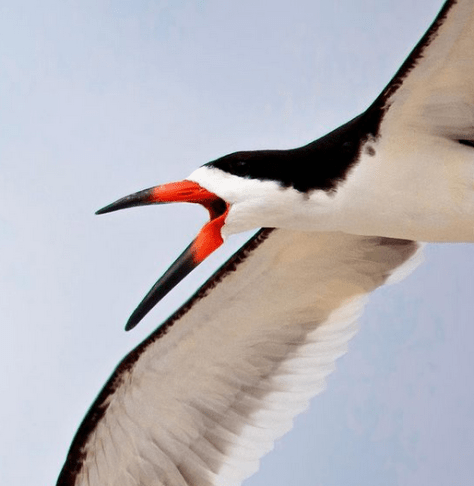


Nicknamed the ‘Toucan of the sea, the most striking feature of the Black Skimmer is it’s red-and-black bill.
As you can see here, they’ve got a lower mandible that juts out farther than does the upper.
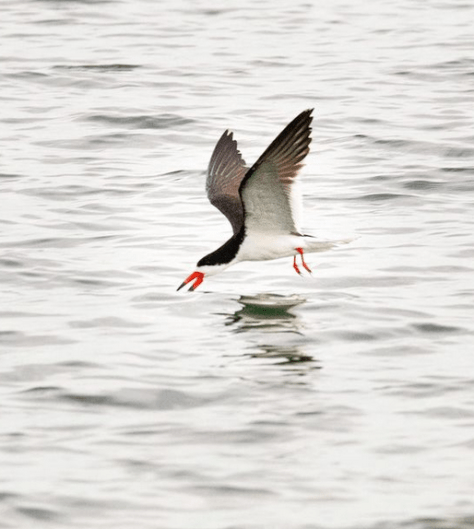
When feeding, the Skimmer flies low over water with its beak open and lower mandible partially submerged.
When the lower part of the bill touches prey, such as a small fish, the bill’s upper mandible snaps down like a mousetrap, securing the bird’s meal.
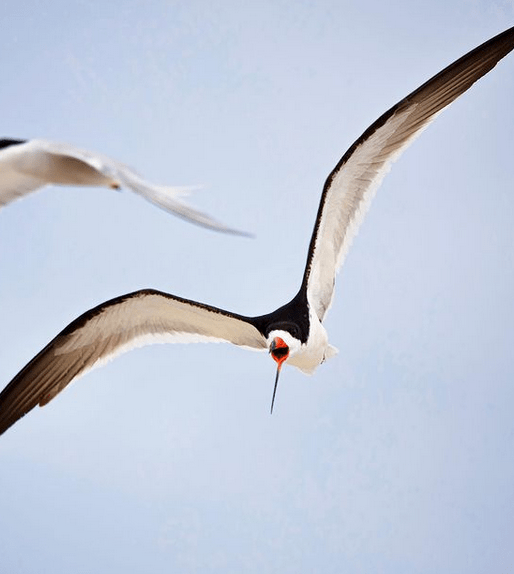
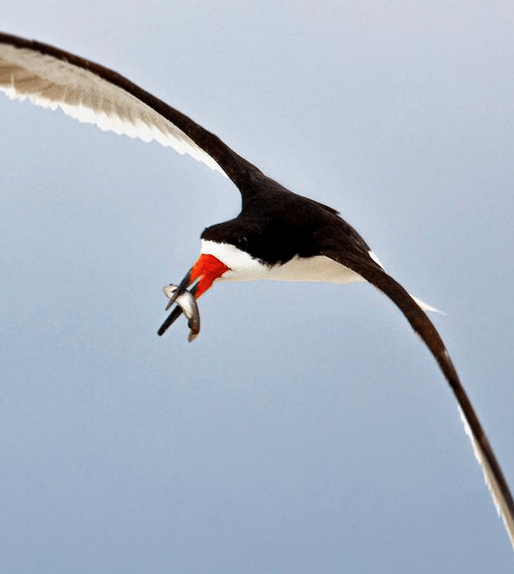
Although you can find them soaring above the shorelines of most of our coastal beaches, Black Skimmers are most often spotted inland feeding in our inlets, estuaries and other slow moving bodies of water near the Atlantic.
Happily, Black Skimmers are a year round resident of North Carolina but they do appear to migrate locally to the southern coast of the Tarheel state during the cooler winter months.

Photos by @sally_siko of @birdwatching_nc on the full frame beast of an SLR, the mighty @canonusa
#5Ds
An Ovenbird encounter at the Pee Dee NWR

When the summer heat rolls in, it’s nice to get out of the sunny fields and into the woods to cool off.
We aren’t the only ones who appreciate the cool shade that the trees provide, Ovenbirds are masters of the shadows and remain active throughout the day even during the hottest hours.
I found this one recently at the Pee Dee NWR while hiking along Wildlife Dr. in Wadesboro NC. It’s a quiet stretch of gravel road that provides a nice pathway through the thick deciduous forest which is the perfect habitat for spotting all kinds of birds and other wildlife.

Marveling at the lush green palette before me, I didn’t have to walk very far before hearing the Ovenbird’s loud call echoing in the woods and was stoked to be able to find it perched on a low branch just a few steps off of the road.
So cool!

Ovenbirds favor mixed deciduous and coniferous forest areas which are semi open under the canopy yet still contain scrubby thickets and moderate brush.
Though they look like Thrushes, they’re actually a species of warbler and like others in that family they are voracious eaters of insects.
However like Thrushes, (and unlike most other warblers) Ovenbirds are usually spotted hunting for a meal on the ground scratching up under the leaf litter in search of beetles, worms and grubs.

Ovenbirds are a spring and summertime resident of North Carolina and are found across the state from the mountains to the coast from April to October. That being said, a few Ovenbirds have been found to spend the winter in Buxton Woods on Cape Hatteras Island in recent years. This is an interesting trend to watch as more people get out to go bird watching during the winter in the OBX.
Pretty cool, huh?

Photos by @sally_siko of @birdwatching_nc on the full frame beast of an SLR, the mighty @canonusa
#5Ds
Birdwatching NC on the Papa Bear Hikes Podcast

By: Sally Siko - Admin Birdwatching NC

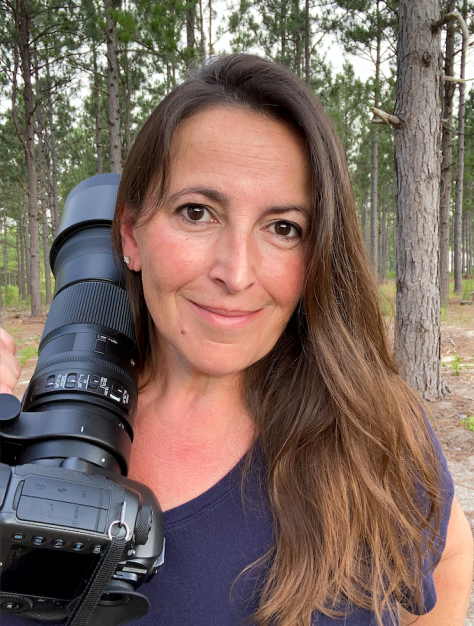
Obligatory blog-post-selfie of your Birdwatching NC admin. Hi ya!

Check out the July 2nd episode of the Papa Bear Hikes Podcast @papabearhikes01 where Martin and I discuss ways to enjoy the outdoors from a photographer / birders perspective.
Find the episode on

iTunes

Spotify

Amazon Music

or wherever you get your podcasts or click on the link below to listen.

https://www.buzzsprout.com/1467697/8798980

In the meantime I want to take this time to share the accounts of some of my favorite folks on Instagram.
Some of them are birders, others are wildlife photographers, tour guides, friends and outdoor enthusiasts, all are good people who love getting out there to capture incredible moments in the outdoors to share with you.

@nilaytphotography
@ncbirdnerd
@wildandexposd_podcast
@deborahroyphotography
@joesubolefsky
@eddeburgessphotography
@gregpiperarts
@srboga
@apexbirdlover
@planet_chad_photography
@28204dan
@2x25mpg
@christian_miller_photo
@biggdread
@mpkopack
@i_guess_i_like_birds_now
@debeluv1960
@talktotheplume
@jeffgresko
@alaskaphotoadventures
@ronhayes_wwi
@rubenbirder
@siberianart
@goodrum.photography
@jhorvathphoto
@birdiepalooza
@ncbirdwatch
@nc_wildlyfe
@kolanderphotos
@thewitt68
@kb_biscuitphoto
@divasecunda

Give them a follow.
You’ll be glad you did 🙂

Happy birding!
Sally
😎

Photos by @sally_siko of @birdwatching_nc on the full frame beast of an SLR, the mighty @canonusa
#5Ds
Papa Bear Hikes July 2nd, 2021 interview with Sally Siko of Birdwatching NC

Rare Bird Alert North Carolina: Roseate Spoonbills spotted in Raleigh at Lake Lynn

By: Sally Siko- Admin Birdwatching NC

Yesterday I received a rare bird notification from @eBird that a pair of Roseate Spoonbills had been spotted at Lake Lynn in Raleigh NC so I decided to go see if I could get a look at them with my friend Corie @calatta
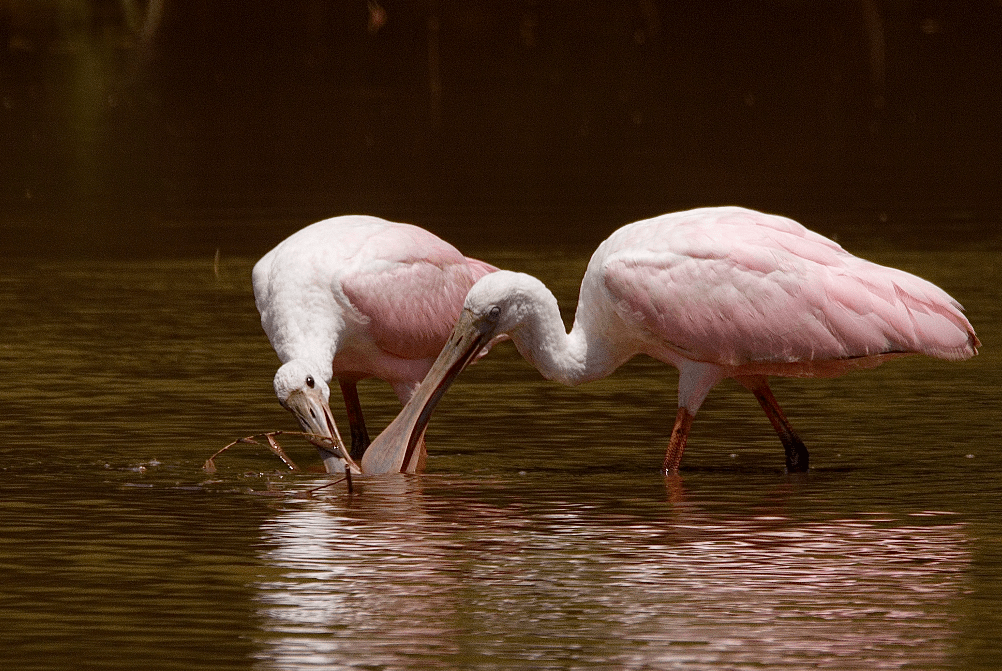
We met up an hour later in the southern parking lot and walked to the north end of the lake where we were happy to find these beautiful birds hunting for a snack in the shallows with a Little Blue Heron
Nice to get a win so easily!


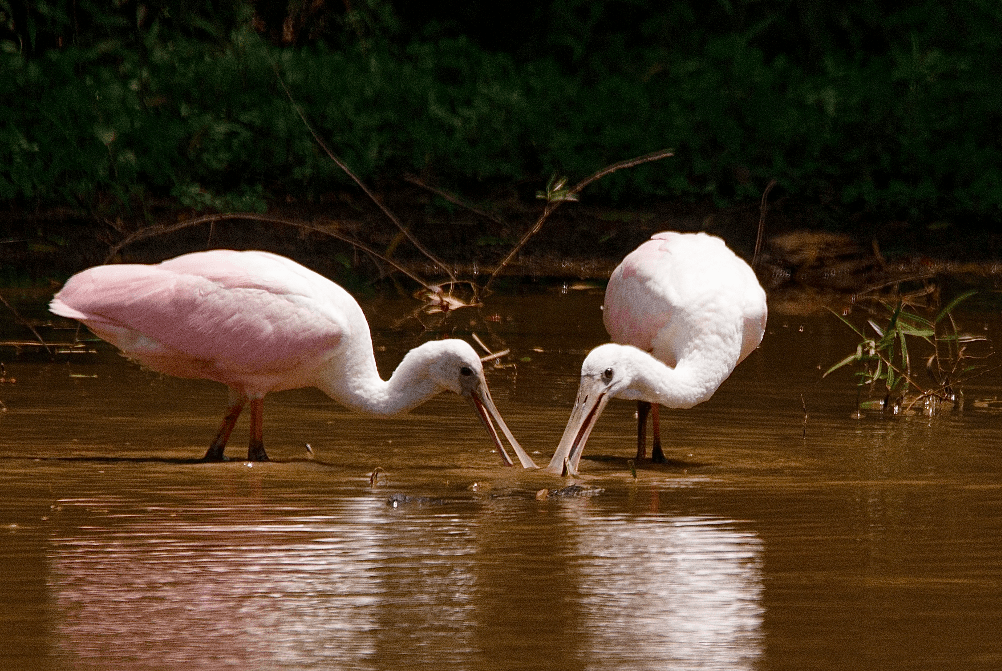
Roseate Spoonbills are normally found in southern Florida and along the coast of Texas during the summer which is why it was so unusual to find these two at Lake Lynn.
That being said, sightings of Spoonbills here in North Carolina have been on the increase in recent years though most of those have occurred in our southern coastal regions.


These lovely birds are best spotted in marshy areas foraging for a meal in the water or mudflats.
Sweeping their namesake spoon-shaped bill side to side in the shallow water, the Spoonbills mouth is partially open as their bill probes into the mud. When they stir up a fish or invertebrate, they’ll clamp that bill shut to capture their prey.
Their diet mainly consists of minnows, but they’ll also eat shrimp, crayfish, crabs, aquatic insects, mollusks, and slugs. Spoonbills will also snack on plants including the roots and stems of sedges.

I have no idea how long these two will stick around the Triangle for so if you can get out within the next day or two you might be able to find them as well.
For reference, I’ve included a Google Map pin drop showing the exact location of these birds at the north end of Lake Lynn (as of yesterday & today) to the end of this post.
Hope you are able to see them too!
Happy birding!
-Sally

Photos & Video by @sally_siko of @birdwatching_nc on the full frame beast of an SLR, the mighty @canonusa
#5Ds

By the way, check out the video of the Roseate Spoonbills in the Instagram version of this post below!

New Birdwatching Trips / Group Birding Tours in North Carolina have been added for 2021 & 2022

By: Sally Siko -Admin Birdwatching NC

Birders and bird loving photographers of all skill levels are invited to join me, Sally Siko as we explore the trails, woods, fields and shorelines of North Carolina in search of interesting birds. From the mountains to the coast, the Triangle and everywhere in between, there are plenty of great species to get out and enjoy throughout the year.

In addition to local trips here in the Triangle, new birding tour dates and locations in North Carolina have been added to my calendar including Bynum Bridge, Pea Island NWR & Ft.Fisher. Click on the dates marked in green in the box below for more information.

Book today as space is limited on these small group tours 🙂

Shown below is the BWNC Instagram feed featuring of some of the species I’ve found for my guests here in North Carolina in 2021.

The year isn’t over yet though. I can’t wait to help you add more birds to your list too!

The talented Mimic: Blue Jays at Greenfield Lake

While birding at Greenfield Park in Wilmington N.C. a few months ago, I heard the call of a hawk coming from a cypress tree nearby.
Raising my lens, I quickly scanned the tree line to find the source of the screeching and was rewarded with the sight of a colorful Blue Jay mimicking the sound of the “hawk” I’d been hearing.
I laughed to myself and took a few shots of this clever prankster while marveling at it’s beautiful blue plumage now captured in my camera.


This isn’t the first time I’ve been duped into chasing an unseen hawk only to discover a Blue Jay in the woods. These highly intelligent creatures are masters at mimicking the sounds of the world around them.
With a vocal range extending from quiet purrs to ear splitting whistles, Blue Jay calls defy easy descriptions.


As demonstrated by this handsome bird, Blue Jays are well known for making screeches that are dead ringers for those of Red-shouldered and Red-tailed Hawks, and for giving calls similar to those of other raptors.
Ornithologists have hypothesized that these crafty birds issue the calls to alert other Jays in the area to the presence of a hawk, to indicate where a hawk was previously, or to trick other species of bird into believing a hawk is nearby to gain exclusive access to a food source.
What ever the case may have been with this gorgeous Blue Jay, I’m glad that I was there to catch him in his act of audible mischief.

Photos by @sally_siko of @birdwatching_nc on the amazing full frame @canonusa
#5Ds

Winterbirds in the summer: Dark eyed Juncos in western N.C.

One of the joys of birding in the mountains of North Carolina during the late summer & autumn is finding the birds that one usually sees in the wintertime here in the Triangle region.
Commonly referred to as the “Snowbird” by residents of central and eastern NC, the Dark eyed Junco calls the higher elevations of western NC home year round.


Often traveling in small family flocks, these birds are constantly on the move as they forage in the low brushy scrub areas in a never ending search for a meal.
I spotted this one at the Craggy Gardens Picnic area along the Blue Ridge Parkway while leading a bird tour here last month. Interestingly, the Juncos that I’ve seen up in the mountains appear to be larger in size than the ones that I typically see in my yard in central NC during the winter. Whatever they are finding to eat around here clearly serves them well in building fat reserves for colder weather ahead 😉

During the warmer months, Dark eyed Juncos feed mainly on insects, seeds and occasionally berries. Once the cold weather arrives, their diet consists of entirely seeds.
They are known to practice an interesting foraging method called “riding.” They’ll fly up and land onto a seed cluster on the top of a flimsy stem then catch a gravity assisted “ride” it to the ground where they pick off the shower of seeds that dropped on the way down.
Thinking that the round ones I’ve seen up in the mountains have that behavior down to a science lol!

Photos by @sally_siko of @birdwatching_nc on the fabulous full frame @canonusa
#5Ds

Birding tour coming up in the Outer banks of North Carolina

View this post on Instagram

A couple weeks ago, I went birding in the OBX at the Pea Island NWR, the Oregon Inlet Fishing Center, the Black Pelican Beach at Ramp 34 and the Cape Point Campground at the Cape Hattaress National Seashore. I also got in a little solo birding at the Bodie Island Visitors Center. From Black bellied Plovers and Caspian Terns, to Marbled Godwits and Yellow crowned Night Herons, it was awesome to get out there to the coast to see some crazy cool looking birds. I’ll be headed back to the Pea Island NWR to lead another trip to catch some great views of migrating waterfowl in November. Wanna join me? Birders and photographers of all skill levels are welcome! Bring your cameras (long lens attached) binoculars or a scope and lets go see some great birds together. Shoot me a DM and I’ll send you a link to the tour page with details & booking info 🙂 Photos & video by @sally_siko of @birdwatching_nc on the fabulous full frame SLR, the @canonusa #5Ds . . . . #birdnerd #birdsofinsta #birdsofinstagram #ncwildlife #birding #birdwatching #birdwatchers #bird #birds #ncbirding #ncbirdwatching #canon #canon5ds #ncnature #northcarolinabirding #audubon #birdwatchingnc #birdersofinstagram #audubonsociety #birdwatchingtour #audubonnc #lovebirdsluvsbirds #lovebirdslovesbirds #obxbirding #peaisland #capehatteress

A post shared by Bird Watching N.C. (@birdwatching_nc) on

A Carolina Wren at Yates Mill Park, Raleigh North Carolina

While tracking down a Fox Sparrow in the woods at Yates Mill Park a few weeks ago, I encountered a noisy Carolina Wren squeaking in a briar along the trail. This little bird and it’s mate were bouncing from limb to limb calling loudly to one another as they searched for food.
It took me a few minutes to be able to snap a decent photo since they moved so quickly in the dense tangle of thorns.


This is typical behavior as Carolina Wrens are more often heard than seen because of their preference for dense, brushy areas. They are frequently found in moist deciduous forests (such as what’s found at Yates Mill Park) as well as in suburban areas including parks and gardens, as well as in agricultural areas and forest edges.


The Carolina Wren is an active, energetic, inquisitive species which can act kind of aggressive at times towards perceived intruders, particularly near favorite feeding spots or nesting sites.
Often found in pairs, these birds hold their tails cocked over their backs and are just as likely to dig through leaf litter as they are to climb tree trunks while feeding.

Swipe through to see a few pics of these cool little birds as well as the one shot I ended up getting of that Fox Sparrow!

Photos by @sally_siko of @birdwatching_nc
Canon 5Ds

Spring birding trips and tours in central North Carolina

https://birdwatchingnc.com/birdwatching-n-c-trips-birding-in-north-carolina

Come birding with me in central North Carolina!
My spring group tour schedule is now posted and I’m taking reservations for bird watching trips March through May.
Reserve your spot early as space is limited.